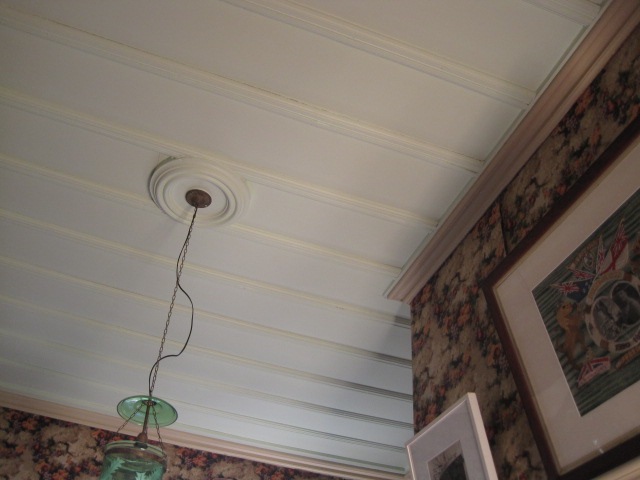
Board and batten ceilings

There are essentially three different ways of ‘restoring’ the appearance of an old board and batten ceiling of the type common in New Zealand houses of the nineteenth and early twentieth centuries.

Ceilings often survive the redecoration and renovation of houses, (particularly villa ceilings, as they’re just too high for anyone to want to bother). Usually they have had little more attention than a quick coat of paint. Of course that in itself can cause plenty of problems, you may encounter ceilings painted matte black, gloss white or with sprayed texture finishes.

However when a ceiling has been fiddled with – it is generally a mistake to overlook its restoration. Ceilings are an important aspect of a Victorian or Edwardian house and need to look right if you’re going to pull off any serious decorative scheme.

In the 1960s and 1970 the first generation of villa restorers stripped ceilings returning them to their natural wood state. I don’t want to dissuade anyone with this plan but you’re going to have to have a lost of patience and spare time. On the other hand if you have a room with an original timber-finish ceiling think long and hard before you commit to paint.  Yes old timber ceilings make rooms darker but consider what decorating options come from this (warm intimate rooms for evening) before committing yourself and the house to a first coat of new paint a hundred years after the house was built.

This posting is about the three states that ceilings are usually to be found in and what your options are.

The first thing to be done is to establish the state of the ceiling. Don’t assume that in a house with lowered ceilings or with flat wallboard ceilings that the original board and batten ceiling isn’t still there.  Few ceiling fiddlers bothered to remove old ceilings and new ceiling applicators often attached directly to existing ceilings – particularly in the period of ‘ceiling tiles.’

 1. Original Board & Batten ceiling
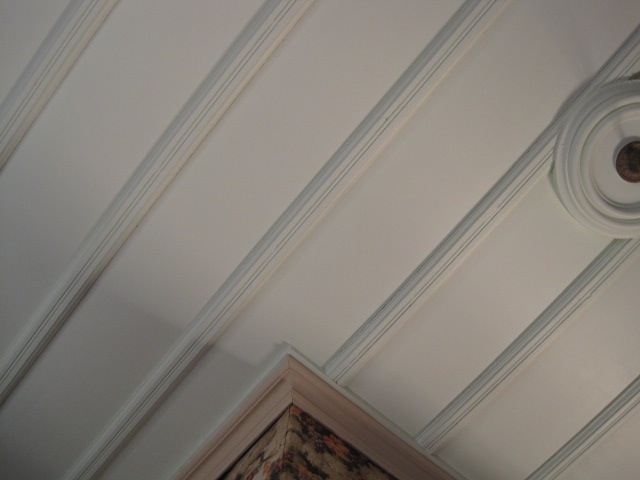
Orignal ceiling - filled and painted.

This is of course the best condition to find a ceiling. You will need to do basic repairs and painting to bring your ceiling back to a respectable finish. More likely if a new ceiling panel or tile has been attached to the original there will be a series of tacked on metal clips to be dealt with.  Wrench these off with a hammer or small bar and then its just filling and sanding until you get the surface you’re looking for.

Some of the boards are bound to have split and these can largely be filled. In the end it’s important to remember that this is an old ceiling and you’re unlikely to get to a pristine state.

2. Original Boards but battens long gone.
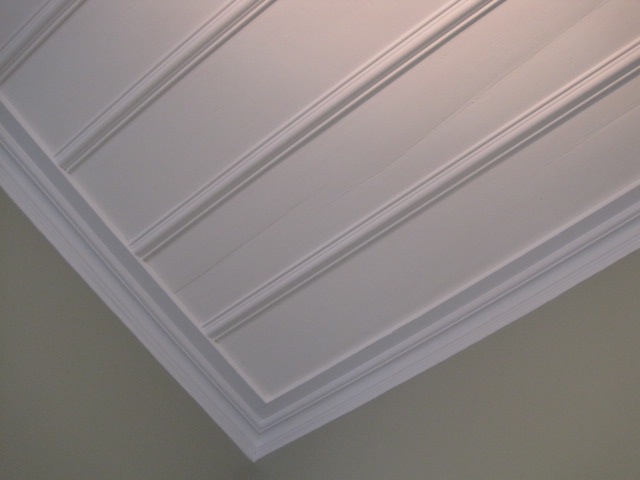
Original boards, new battens - a few obvious cracks

On many occasions previous renovators will have removed the battens in order to get good adhesion of their new surface to the existing boards. If the boards are in good condition it is worth considering simply adding new battens. These you can buy either at a demolition yard or reproduction through Villa & Bungalow or another similar supplier. Old battens tend to split when being taken off – so reproduction might be better.  Certainly MDF reproduction battens are significantly cheaper and when covered with paint do the trick nicely.

Here’s a tip try sanding filling and cleaning up your boards before you put up the battens – its easier to maneuver the sander before the battens go up.

 3. Both Board and Battens gone
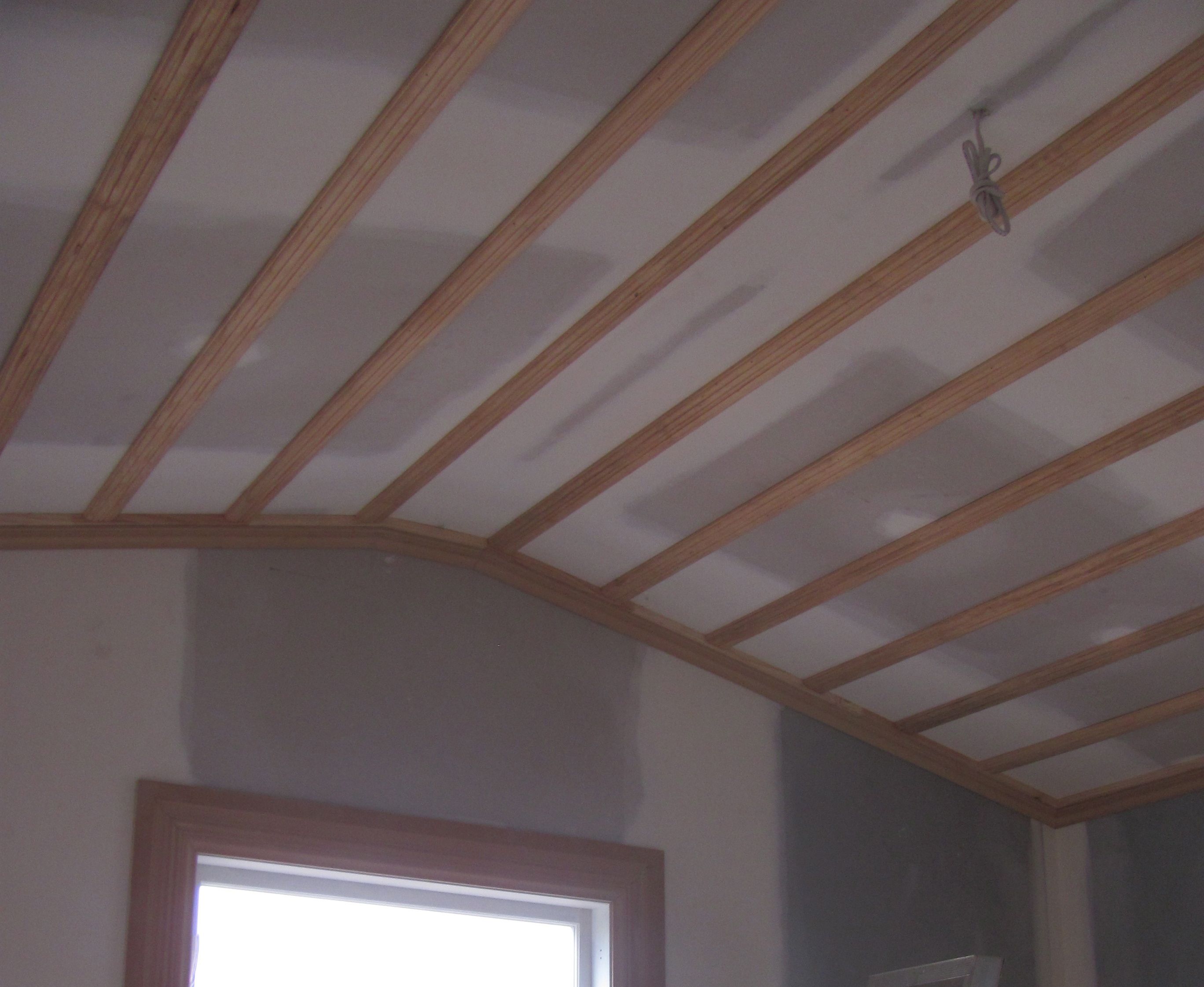
New battens go up over wallboard

Then there’s the renovators/modernizers who have removed the original planks – usually for firewood. In the same class are boards that are too badly damaged or if you wish to make two rooms into one.

You can of course put up new boards – but this going to cost significantly. A much better option is to use a wallboard and then to put battens over the board – replicating the spacing of original Victorian period battens.
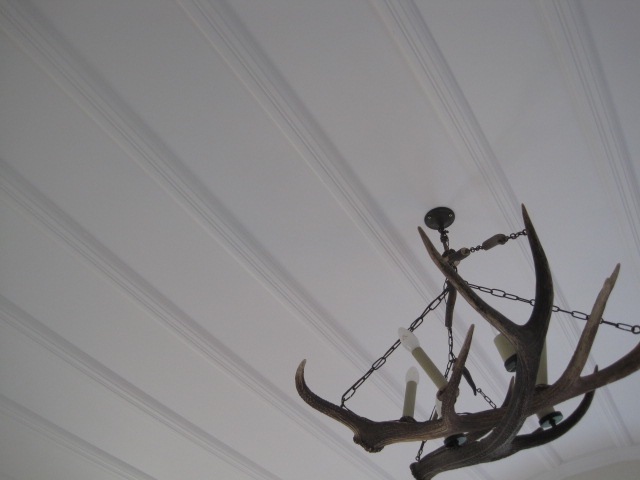
completed new board and batten ceiling

Remember the ends of the battens need to terminate in a flat piece of wood, where ceiling meets wall, and any cornice butts up to that piece of wood and not the battens themselves.

The end result is indistinguishable from the original and once its all painted – no one will know – leaving more money to be spent of important decorative details.

 DLJ

Posted in original surfaces, practical matters, Uncategorized | Leave a comment

The year [well almost] in review

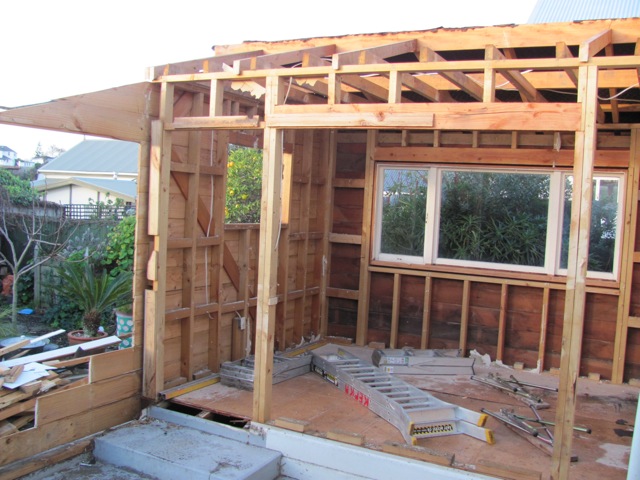
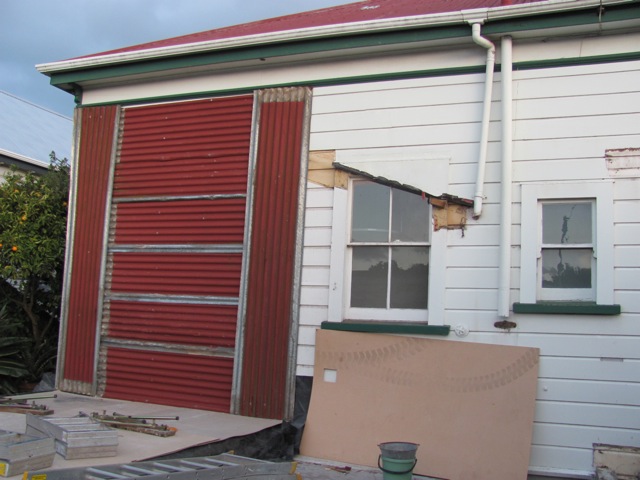
At long last we managed to get rid of them. Like a divorce or other painful separations, they kept wanting to come back. The painters wanted to wedge themselves in between Christmas and New Year. They did not understand that a building programme which was meant to be ‘nine weeks max’ had stretched out from July 16th 2011 and kept right on going into 2012 and that we had been under occupation for a long six months.

Like other kinds of occupation we felt banished from our own homeland, forced to be ‘pleasant’ as well as living in a kind of permanent demolition zone. The house became invaded by dust and dirt. The long dry autumn snapped into a bitingly cold winter. Loud music from radio stations we never listened to permeated the daytime air. Holes opened the interior to draughts and chill air. We became sick. Douglas first of all became infected with the dust and developed a cough and I got eye problems. The strain was enormous.

Renovations – such a calm, simple, accepted word – hide behind them a whole anarchy of unleashed forces. A relationship – any relationship – is put under almost intolerable stress which is acutely financial and in almost every other way – sound, privacy, intimacy – threatens the very foundation of family or household life.

This is probably by way of explanation of why we have not written much about the this side of the process – till now. However now we have got the house back to ourselves – for a week anyway – and soon permanently, so it seems a good place to look back. Hopefully this will make sense of what appeared a semi-chaotic and remorseless process of sudden and jerky change for readers of this blog. Now things are – a little – calmer we can afford the long look back.

This dear readers is what we have been living through:

1. From Sunroom to Morning room

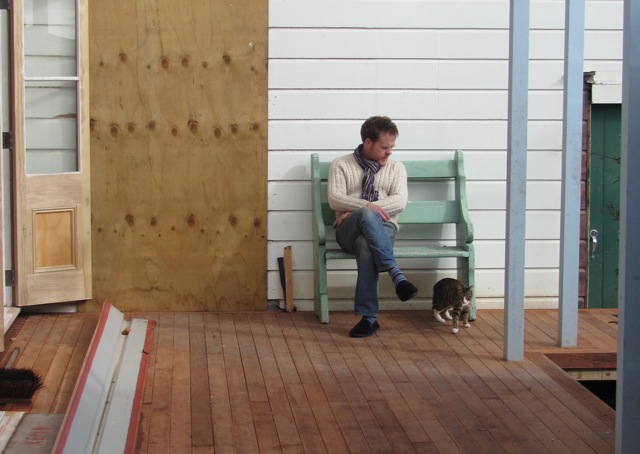
2: The Deck.

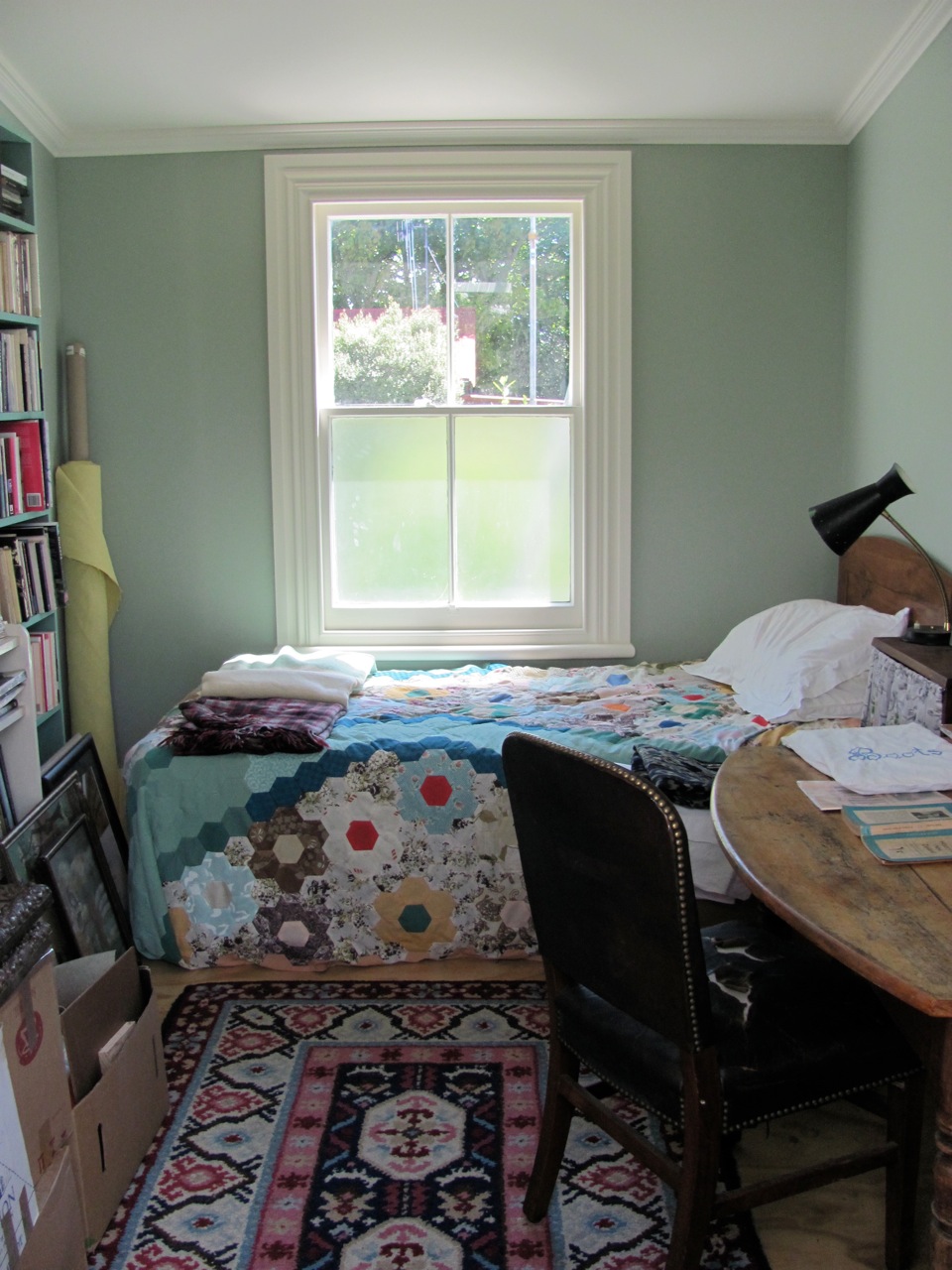
3. Master Bedroom 

4. From wash house to  garden room.

Like all renovators we can say…we are more or less happy with what we have got and probably it only by looking back we can comprehend and appreciate the scale of the changes.

Hopefully, after we have finally ejected the painters and the plumber – we can settle down to enjoy our new spaces.

PW

Posted in practical matters | 2 Comments

Emile Zola and the thyme border.

I’ve talked before about how Gustave Caillebotte (1848 –1894), the French impressionist changed my attitude to Dahlias and how Beverly Nichols’ the English between-the-wars writer turned me onto Heliborous. Well this is another literary reference for the garden – this time homage to the French writer Emile Zola.

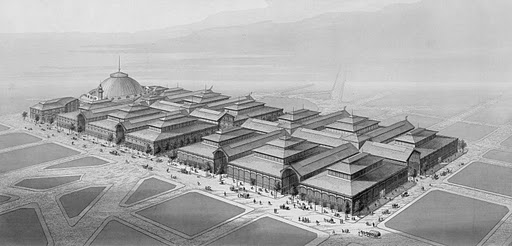
I love Zola and the slightly earlier Balzac and about this time of the year usually read something by one of them, a couple of years back it was The Fat & the Thin (Le Ventre de Paris) – set in part in the Paris vegetable markets at Les Halles designed by the French architect Victor Baltard in the 1870s but long since demolished (see below)

Zola is remarkably descriptive but perhaps not so often read today. Therefore in order order to encourage a summer Zola revival – the opening of The Fat and Thin (condensed) goes like this:

Madame Francois’s horse, Balthazar, an animal that was far too fat led the van. He was plodding on, half asleep and wagging his ears, when
 suddenly, on reaching the Rue de Longchamp, he quivered with fear and
 came to a dead stop.

The horse has stopped in front of what seems to be a body lying in the middle of the road – he is assumed to be either drunk or dead and Mde Francios is contemplating how to haul him into the gutter so that she might pass with her cart of vegetables.

Meantime, the man on the road had opened his eyes. He looked at Madame
Francois with a startled air, but did not move. She herself now thought
 that he must indeed be drunk.

“You mustn’t stop here,” she said to him, “or you’ll get run over and
 killed.

Then, with an effort and an anxious expression, he added: “I was going
to Paris; I fell down, and don’t remember any more.’

Madame Francois could now see him more distinctly, and he was truly a
 pitiable object, with his ragged black coat and trousers, through the
 rents in which you could espy his scraggy limbs. Underneath a black
cloth cap, which was drawn low over his brows, as though he were afraid
 of being recognised, could be seen two large brown eyes, gleaming with
 peculiar softness in his otherwise stern and harassed countenance. It 
seemed to Madame Francois that he was in far too famished a condition to
have got drunk. “My name’s Florent, I come from a distance,” replied the stranger, with 
embarrassment.

Florent, the hero of the novel, eventually gets a job at the market and it is when Zola describes a later meeting with Madame and conjuours up the promise of a rest in her herb garden

Those rainy mornings greatly worried Florent, who thought about Madame 
Francois. He always managed to slip away and get a word with her. But 
he never found her at all low-spirited. She shook herself like a poodle,
 saying that she was quite used to such weather, and was not made of
 sugar, to melt away beneath a few drops of rain. However, he made her
 seek refuge for a few minutes in one of the covered ways, and frequently
even took her to Monsieur Lebigre’s, where they had some hot wine
 together. While she with her peaceful face beamed on him in all 
friendliness, he felt quite delighted with the healthy odour of the
 fields which she brought into the midst of the foul market atmosphere. She exhaled a scent of earth, hay, fresh air, and open skies.

“You must come to Nanterre, my lad,” she said to him, “and look at my
 kitchen garden. I have put borders of thyme everywhere. How bad your
 villainous Paris does smell!”

There it was. I went out and planted a border of thyme around the central part of my vegetable garden. It grew quickly, flowers well, responds to a trim and until the chickens grew large, protected my lettuces from harm. Now there is layer of netting as well.

Every time I’m in the vegetable garden, I think of the unfortunate Florent and of Madame Francois’ kind offer and then breathe in the aroma of thyme.

DLJ

Posted in gardening, inspiration | 4 Comments

Deck the Halls …

Merry Christmas – to all Decor Extremes followers from Peter and me.

Now I ‘m not generally one for Christmas, although I must say I am settling into the rift this year – with excellent presents – the new Constance Spry biography and Patricia Reed’s William Nicholson Catalogue Raisonné and a host of home-baked goodies from my sister and I’ve still got to look forward to a baked ham (glazed with stout) and a mean aioli made with fresh Hawke’s Bay garlic.

Christmas gets better every year and therefore my participation level increases slowly (I used to be a total refusenik). Indeed some years back a group of work friends distracted me while another group of them broke into my then house and decorated it for me (I wasn’t that thrilled). The policy then was – ‘deck the halls with absolutely nothing.’

I’ll admit that I still fall down in the area of Christmas decorations. At Finnis house there is no tree; no tinsel and the lights remain resolutely at back of the cupboard. There is no tree because I refuse to go for a tinsel tree (appallingly 80% of New Zealanders do) and real Christmas trees are just so difficult to dispose of after the obligatory 12 days – it’s not like you can throw them in a rubbish bag and put them out at the curb.

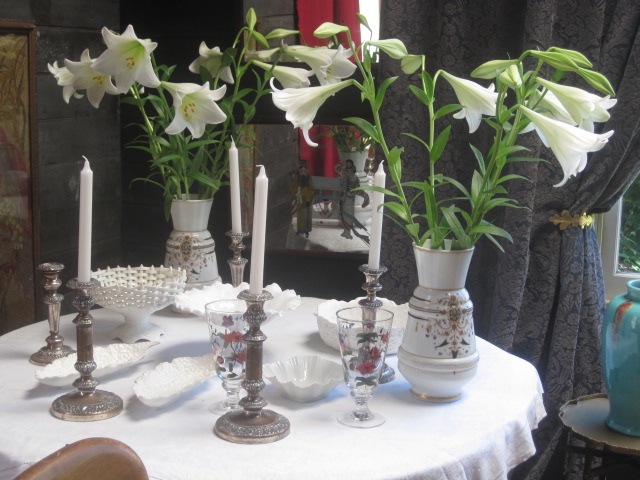
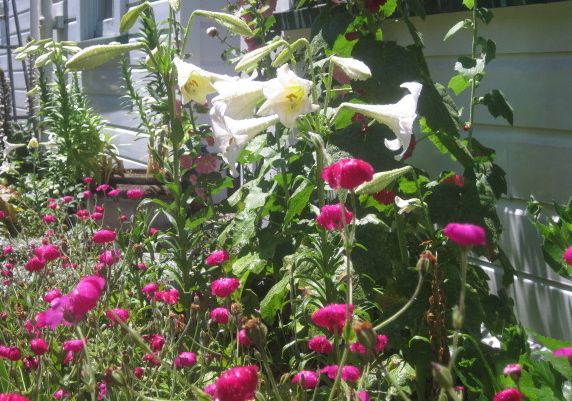
I prefer instead to go for another traditional decoration in the form of white Christmas lilies. These I’ve been planting in the side border for the last few years and they have an amazing ability to be out on Christmas day. Even yesterday they were only in bud but today they look fabulous.

Even better still this year they get to stay in the border as I was gifted a big bunch of lilies from a stylish friend – so now in matching vases they sit on our white covered table and become our Christmas tree.

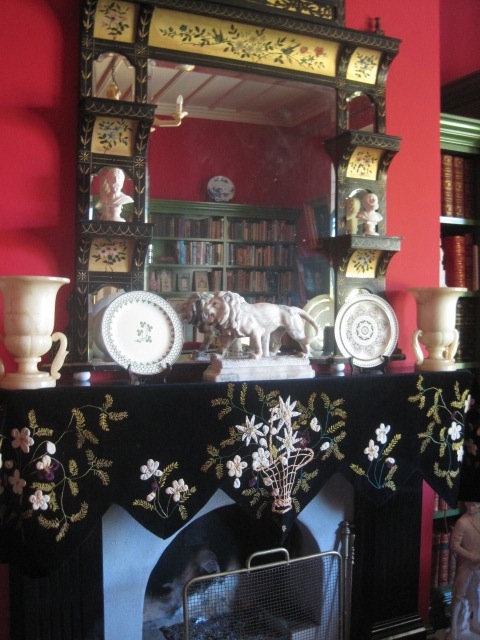
We have also put up what are called the ‘drappies’ two embroidered Victorian mantle covers. One in a greenery yallery grosvenor gallery and the other in black and violet. These mark the seasonal passing on the open fires into temporary obsolescence, which occurs about now.

They are wonderful pieces of work – one with baskets of daffodils the other with purple pansies. A real reminder of how nineteenth century women once passed the time – and why so many Victorian homes burnt down.

So these are our Christmas decorations – traditional in their own way and something we look forward to every year.

Have a great day and may the season present great decorating opportunities for all.

DLJ

Posted in colour, gardening, Uncategorized | Leave a comment

Avoiding Violet

In order to obey the household rule regarding the purchase of small paintings (no more it is decreed), I’ve been on the look out for larger Victorian paintings. These are few and far between.  What’s more I’ve discovered that we have come to expect older paintings to be small.

This caught me off guard at a Dunbar Sloane sale the other day. There was a catalogued work called The Hours which I assumed to be a small panel work 84mm by 216mm – a student copy of a work by the early 19th century French painter Marie Louise Elisabeth Le Brun. Arriving too late to the sale to get to the viewing, and not really prioritizing dancing cherub paintings in the moment I did have, I was caught off guard when they auctioneer declared the work too large to lift and offered only a corner of the work to view.

It was an enormous 840cm and 216cm work in a dark wooden frame – essentially great décor.  I waivered, not knowing its condition and the work sold for tuppence to someone else.  I’m not too concerned. I’m not looking simply for old painting by the metre but for something that is ‘us’ and dancing cherubs are probably a step too far.

Joseph Gaut, Dunedin Harbour at Sunrise (1890)

The next day of the sale offered up another opportunity – this time one we’d had time to consider. We had spied a Joseph Gaut, Dunedin Harbour at Sunrise (1890), when it was offered in their major art sale some months back. Now I like ship paintings – I like them a lot, and nicely framed and of some size this had some appeal. There were quirky aspects to the works – problems of scale and a bow-on end view of a ship is never easy to achieve but the painting had charm. The one thing that held me back was the violet, mauve lavender, colouring.

A still morning on Otago harbor is a very lovely thing and has attracted many a painter and I get what Gaut was trying to achieve here. It’s a particular early morning state of light that sits somewhere in the violet spectrum and is a very beautiful thing to encounter first hand. However, when applied to the realms of clothing or décor, mauve is a strange strength-sapping colour.  Peter saw the whole thing as impressionist and romantic – I saw the whole thing as mauve and so we rejected the work as problematic.

What we didn’t know was that Dunbar Sloane had a plan to further ensnare us.

When the painting hadn’t sold they had bumped it out of their ‘important paintings’ sale and into an ‘affordable art’ sale – basically offering the Gaut at a new bargain basement price that was too tempting to ignore. We discussed it again. I bid. Now we have a large Joseph Gaut.  It is still however mauve.

As yet the painting isn’t here but at 83cm x 152 cm it is going to have some impact on the Studio in which it will hang. This isn’t necessarily a bad thing as the Studio has born the brunt of our renovations and been stacked high with our worldly goods for too long. It is now returning to normal – down from three dining tables to one again – and we need to think about a more coordinated look for the room.

The Studio is the most impressive and unexpected room in the house and certainly the most fun when it comes to decorating perhaps because no one else has one and therefore there are no expectations. The walls are blue – original 1906 blue – and it has to be said with a little violet in the mix. The curtains are red on one side of the room and blue at the end. So perhaps a mauve painting might work?

DLJ
Posted in art, auction finds etc., colour | Leave a comment

An Absurd Luxury

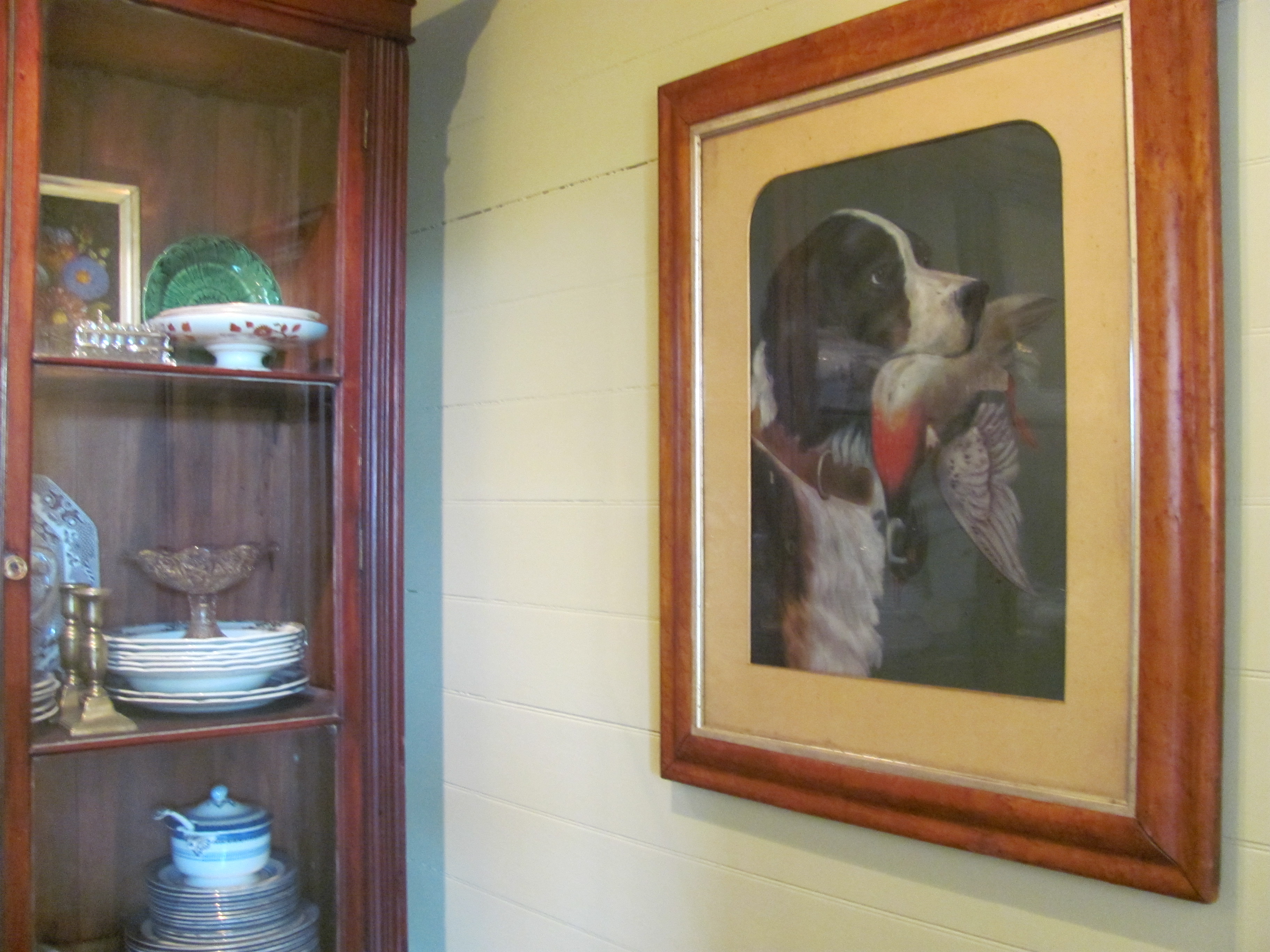
Luxury by its nature is absurd. It is excess – not what is needed – but what the heart cherishes and the mind daydreams about. The ‘plate room’ is Douglas and my luxury item in terms of the renovation of the house. (A plate room: a room like a butler’s room in which plates and dinnerware are displayed.)

Now before you start humphing about the state of the economy and states of delusion, I should point out we did not go for: a pizza oven, an outdoor fireplace, a jacuzzi, a conversation pit or an enormous garage to house our notional gin-palace launch. Lord knows – we don’t even possess a jet ski or that other sound pollutant – a leaf blower.

What we have is an architectural indulgence. It is the kind of thing one can do in the provinces (he says straight-faced.) By this I mean one can purchase a very large old dump at the price one would pay for a run-down worker’s cottage in an outer-outer ring of Auckland. So we have space.

What we had, in fact, was the original tiny bathroom of the Finnis family home. In the Edwardian period it had to be used by the four adult members of the family, including two daughters (who presumably disliked its tininess.) It had a short bath and a basin. The loo was in a separate space.

By the time we bought the maze of flats it was still a bathroom but of the baleful ‘flat’ variety – meaning budget, mean and horrid. The only nice thing it had about it was it faced directly north. But also the moment you opened the window the neighbours in their kitchen could observe you literally sitting on the throne…Well hi!

What to do, what to do? I am an architectural dunce, lacking in imagination. Douglas is the person who gives an immense amount of thought to architectural spaces. It was he who suggested we have a ‘plate room’.

Well, readers of this column will know we have a thing about plates. I have written about how nobody wants old dinner services any more because you can’t shove them in the dishwasher. Routinely now we have been buying up the unloved and unwanted – and one-time cherished dinner services. These run from the posh – gilded Irish plates with a coat of arms – to plebian – a sort of best dinner service that a lower middle class family might have had and used only on special occasions.

Who cares? We do. Regard us, if you like, as the St Johns Ambulance of the discarded. So Douglas conceived of a kind of coronation room for these unwanted items.

Arduously the horrible waterproof wall-coverings were peeled off. These revealed a mishmash of tongue-and-groove. The ceiling also revealed similarly damaged tongue-in-groove. (The lovely owners of the house in the 1950s, when converting the despised villa into flats, often took random pieces of woodwork and turned them to new patchwork use.)

But now we had all the rimu tongue-in-groove from the original kitchen, which could be used to repair the mess. The builders did this obligingly but no doubt a little mystified as to the peculiarities of queers on the decor lam. The floor unfortunately was at a different level to the new morning room/sun room. We bit the bullet and had a new floor put in to match (This was the most expensive part of the plate room). Tongue-in-groove covered over the original door into the bathroom. And then it was ready to be painted.

Eyeing the rough mess of paint surfaces the painters – who are used to doing immaculate – as-new – paintjobs – raised their eyebrows and waited in suspense. But we told them the shocking news: we liked it rough. It was even ok for the paint to sort of not sink into all the grooves.

Douglas decided to continue the strange dank utilitarian colour we have used elsewhere [Resene Yuma]and which we call affectionately ‘snot’. He also made the good call of contemporary strong lighting. After all, the enclosed room had no light source apart from an internal door. And if it was to work effectively as a display room, it had to ‘have light’. (He decided on three powerful downlights.)

Now there was a big leap into the dark. We knew the local auction houses often had brilliantly large pieces of furniture which came from big country stations, or the huge wooden mansions of which Hawke’s Bay has so many. Usually these pieces of furniture were much too big for contemporary spaces. We knew we’d luck on something suitable to display our plates.

Jumpcut. I was up in our favourite Auckland auction house, Cordys, and there was a magnificent New Zealand library bureau. It was a curious mixture of rimu, rewarewa kauri and flame mahogany on the doors. It even had little brass beading running down the edge of the doors. It also had lovely old rippled glass.

Douglas – in Napier – measured the space. It would fit.

The bureau hadn’t sold in the antique auction the previous week. A phonecall and Douglas and I owned it. ($120 to transport it to Hawke’s Bay.) Then came the fun part – fitting it into the room – surprisingly easy, as if it always belonged. Then the really fun part – decorating it with all our plates and other things. This was better than Christmas, better than New Years. It was almost better than winning a book prize (…almost.)

It was plate heaven.

So there it sits, a kind of lovely exhibition piece, a luxury item.

But it has its ceremonial uses. Last night, at 5pm New Zealand time, a much-loved Australian friend (who often commented on this blog) Ian MacNeill was having his funeral in Sydney – if I can use the active tense of the verb. Douglas and I were back here in Napier. I wanted to mark the occasion. (Ian admired finesse in dining arrangements.)

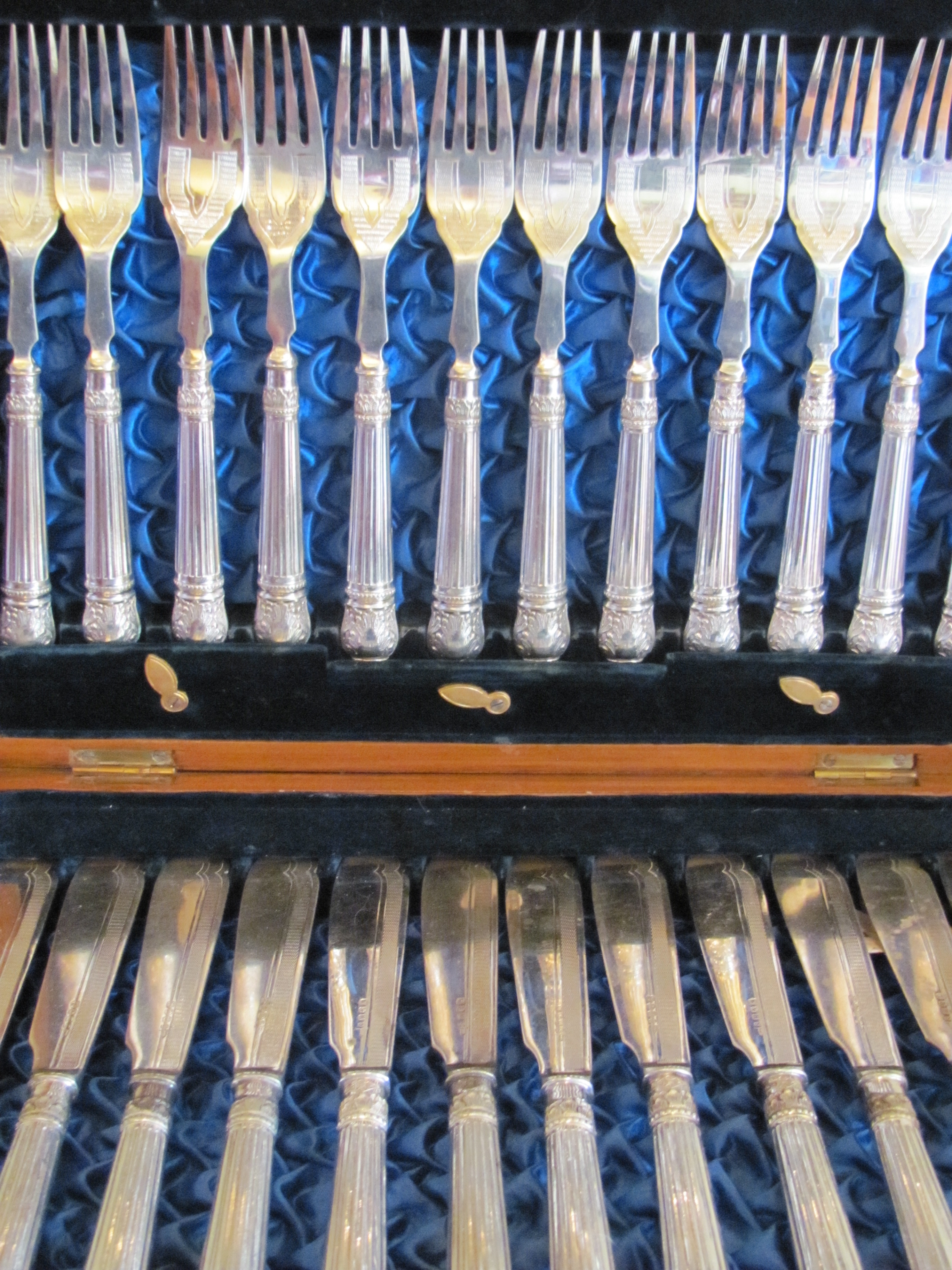
I put out a nice clean damask tablecloth. I went into the plate room: I selected a modest but sparkling Edwardian dinner service – pale white, gold and navy blue. I got out the fish knives and forks, which had once been owned by Eric Mareo, the notorious orchestral-leader/murderer whose wife was having an affair with the fabulous I danced-nude-painted-in-gold lesbian icon Freda Stark.

Then I cooked a considerate meal of the kind Ian would have liked. (In fact when I spoke to him on the phone when he was in the hospice – helped along by Good Sister Morphine – he reminisced in vivid detail about an asparagus risotto I had made when he was staying in Napier. It was a meal I hadn’t even thought about.)

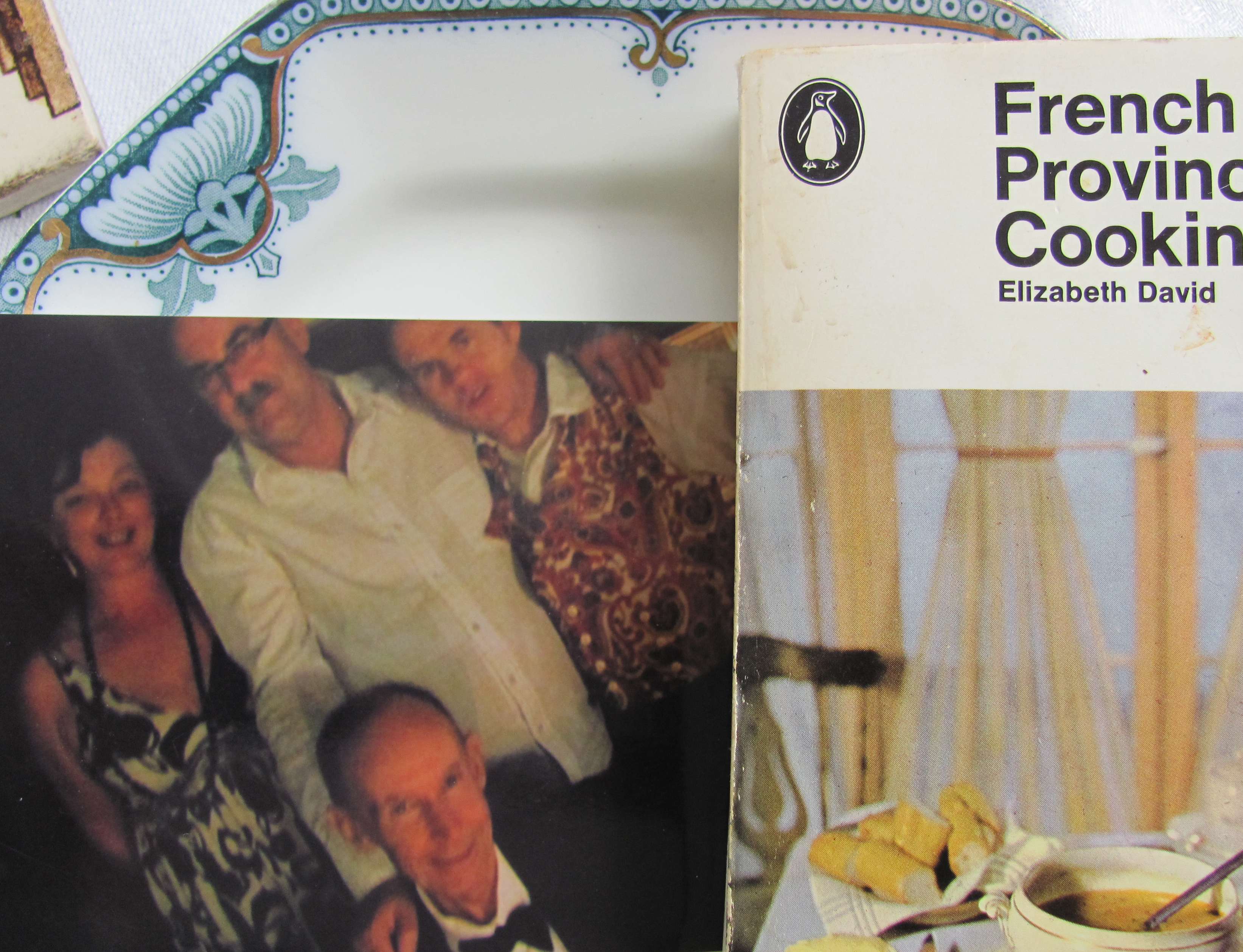
This is the meal: ‘Sole Bercy’ – fresh sole cooked a la Elizabeth David (in white wine, parsley and shallots,  in ‘French Provincial Cooking’ p343), new potatoes smelling of the earth, silverbeet fresh from the garden and tomatoes baked with fennel. The wine was Prosesco. We toasted dear old Ian and I felt his presence in the nicety of everything – the silver, the napery – (he came from a world of serviettes) – and the dinner service so quickly selected from our very own fantasy space: the plate room.

PW

Posted in auction finds etc., colour, furniture | 4 Comments

Enclosure but no closure

1.

The builders are still here and what was a ‘nine to ten week job’ enters its 6th month and we wonder if there are going to be men in the house into the New Year. Don’t get me wrong, we like our builders, but living with construction is unsettling and exhausting.

By mutual agreement we cast them out of the house in early November – and they are now working on the exterior – in particular the creation of a carport. We are not car types but having a roof over the vehicles seems to be a basic requirement these days. It took forever to convince the architect that we didn’t mean an uber-garage but a carport (sans doors) and really after that battle was won we stopped paying much attention to the detail of said future carport.

That is until the day the concrete went down and we realized it was a very large carport into which three cars might fit at a squeeze. When the first wall went up we realized that it was a very tall carport. This caused a certain amount of alarm but now the cladding has gone up on the frame and the door been put in, we realize we now have the enclosed courtyard we’d been wanting and have become more excepting of the monolith (at least until winter when it will cast a long shadow).

This allows us to rethink, or perhaps finish thinking through, the back garden, which was always intended to be looser and more informal than the front garden. The new carport wall also encloses the chickens a little more effectively so perhaps now they will spend less time on the drive (but more time in the vegetable plants).

You now enter this garden through a door in the back of the carport and so there is an element of surprise. It should also be a little more sheltered from violent winds. Looking back where there was once a view of the comings and going on the lane now this vista is enclosed – that will take a little getting used too – the lane is full of vehicle and pedestrian traffic and the lively parade was always worth a passing glance.

2.

Out on the street, and across the road, there is a different kind of enclosure about to take place – this time the privatisation of a public view. For decades, and perhaps forever, there has been a view of Cape Kidnappers from a particular spot on Napier Terrace. The Hukurere School for girls used to occupy the site but I don’t recall it blocking the view.

As is inclined to happen with both the Anglican and Catholic churches, when the bottom line intercedes their love of heritage buildings goes the way of all flesh. Hukurere was sold and came crashing down – and a developer entered the picture.  His first plan (probably a ruse) was to place 61 units on the site. This it in a heritage area of narrow streets and few modern services would cause chaos. A local uprising ensued and the project was forced into a mediation process. The result the developer gets to build 41 units on site (21 would be about right for the scale of the property and surroundings area).

This well loved public view – providing an ideal point to stop for a moment when walking Napier Terrace, view will eventually be enclosed – and  there will be no ‘doorway’ in except for those who purchase their own individual portion of what was once a public view. So we await the eventual arrival of bulldozers and an army of builders that will put the unsettling nature of our, really very small, project into some perspective.

DLJ
Posted in Uncategorized | Leave a comment

Dusk is the perfect time to imagine.


Dusk is the perfect time to imagine. Hard lines blur and imperfections cease to nag. It is  one of my favourite times in the garden. You can imagine how things will be the next year, when this year’s plantings can be improved.

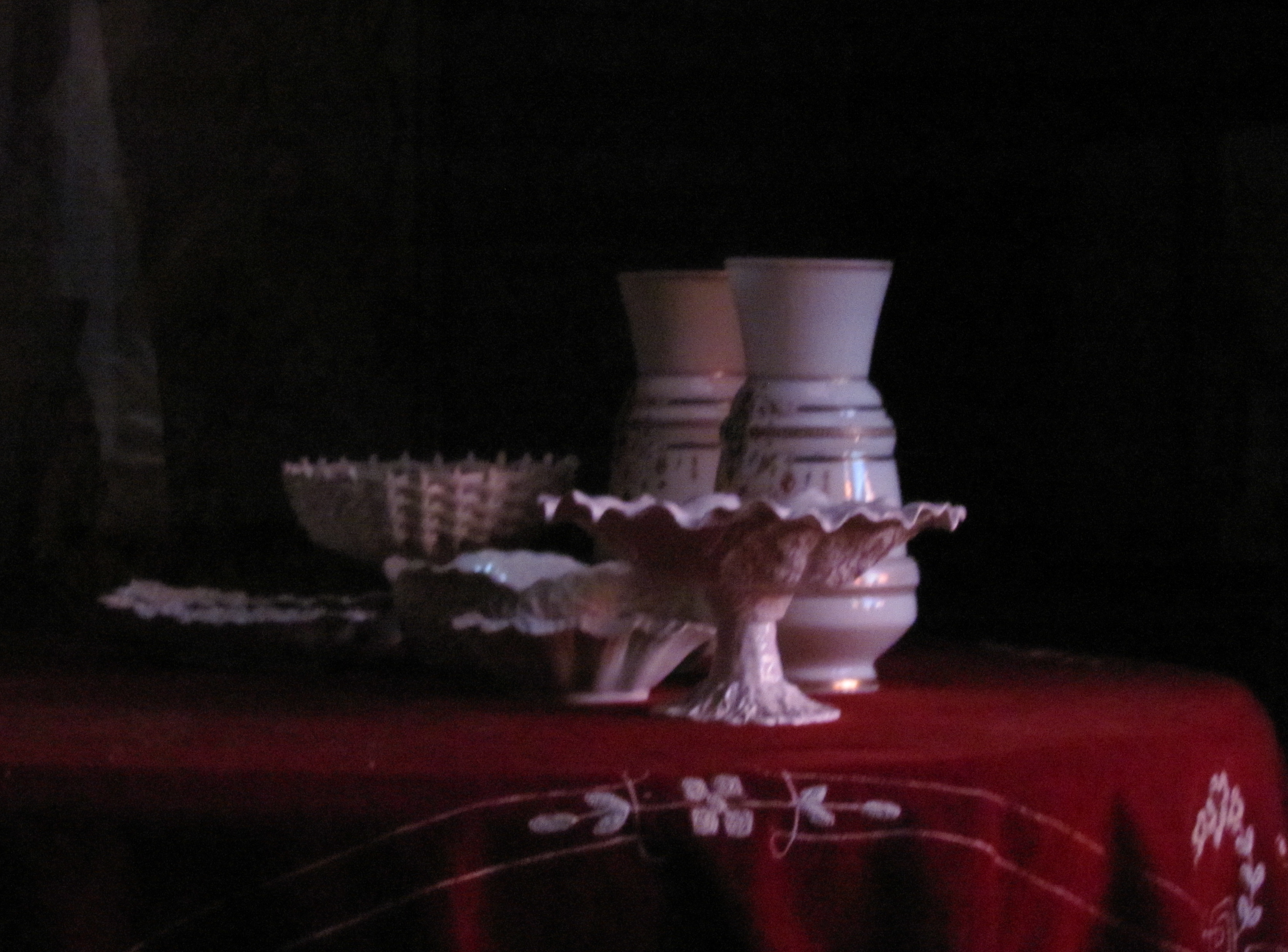
I took these photos last night. The raging Westerly, which makes life on the very top of Napier Hill miserable at this time of year, had dropped. All was still, and at a certain point, I looked out the window and saw everything had become bathed in the light of a beautiful sunset. The sky shows the clouds which echo the stillness after a storm. The garden became magical. And in that curious way of life seeming like art, the sky became like a Rodney Fumpston print and the objects on red plush seemed to evoke that French painter of eloquent still lives.

Sky a la Fumpston

Stil life a la Chardin

I took these photos in a way to record what it was like having a garden right outside the windows. Douglas and I are contemplating a vast change in the front garden: pushing the border back to the front hedge, so you look into a depth of the border from the house rather than, at the moment – as here – looking into the back of the border.  However, at the moment we do fortunately get a few lovely roses quite close to the glass.

PW

Posted in Uncategorized | Leave a comment

Not Going to Dannevirke

I’ve been told that at least one reader looks forward to reading a Decor Extremus posting every Saturday morning (total flattery I know) and that recent tardy posting habits are to be redeemed by good behaviour and regular posting forthwith.

So here I am on a Friday night processing the decision not to go to Dannevirke tomorrow and blogging about it.  Now I suspect most of you have no notion that Dannevirke is the place to  be tomorrow – but really it is – because there is an auction – not only an auction – but an estate clearance of a collector. Valhalla I hear you say, as you open google maps to find just were Dannevirke is.

Dannevirke is in Central Hawke’s Bay. It was a town set up by Scandinavian settlers in the end of last century. Although I don’t wish to incur the wrath of the locals the best thing about Dannevirke is an amazing item of 19th century human hair picture making at the local museum – worth the trip in itself.

The collector in question, whose estate is being sold up was a share-milker who simply went to Maidens & Foster for years and bought the things no one else wanted and put them in a shed. I wonder if he had the idea of a private museum in mind as so many of his generation did or was he just a horder?

I have peered and peered at the images of M&Fs site but in the end I’ve decided against the 90 minute drive on the basis that we don’t need more stuff – this in itself is not only a unique conclusion, it is something of a delusion – because next week I’ll be hauling more objects over the doorstep and perhaps just perhaps kicking myself for not going to Dannevirke tomorrow

DLJ

Posted in Uncategorized | Leave a comment

find me in the morning room

We have for a long time had a ‘sunroom’ it was a small room with low ceilings and horizontal picture windows designed to catch the sun. However it offered up little else in terms of aesthetic pleasure. An earlier owner did their best painting it with a coat of apple green paint but the room remained tiny and cramped. That room has gone, demolished down to its floorboards and rebuilt as an elegant space with both room to stretch and some respectable head height. So now the term ‘sunroom’ seems wrong – a 1950s word redolent of retirement homes and semi tropical pot plants.

What then to call our new room?

The rooms here need names if only because Peter has a habit of calling out – where are you? My usual response ‘here’ is proving daily less effective as we reclaim more of the house back from the builders and Peter is left wandering from room to room and getting increasingly annoyed. In his last posting he refereed to this space as the ‘sun room aka back dining room’ but that’s not really satisfactory.

The modern age sometimes seems all about the limiting of options (particularly with language) and the range of names for rooms in current use has bumped down to the usual boring suspects, lounge, living room, kitchen, dining, bedroom and bathroom. Yes there have been some recent additions to the room vocubulary – the rec room, jacuzzi, or the home theatre but they’re not rooms one wants ever to confess being in.

It is no surprise that the Victorians had a whole slew of room names and I’m keen to see some of them brought back. We do fairly well here – with the Studio, the Library and a Dressing Room. However at the same time we’ve also demolished the Scullery, the Pantry and the Washhouse and in a way deleted them from the language of the house and it seems we need to make amends and bring a few terms back from obscurity

It seems to me that two of the leading contenders for the old sunroom should be the ‘Breakfast room’ or the ‘Morning room’. The logic being that this is the room we have breakfast and lunch in and is the best room in the house to be in in the morning – all sounds very proper to me.

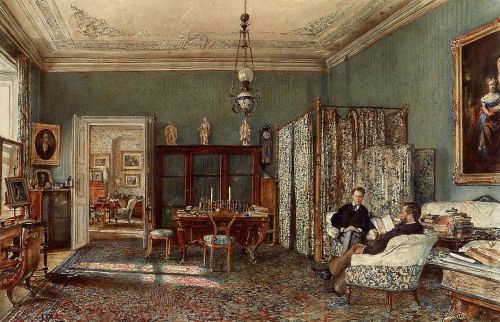
Rudolf von Alt, The Morning Room of the Palais Lanckoronski, Vienna.

Looking at images that Google has kindly organised under the heading of Morning rooms – it seems to me that the requirements are morning light, a good sized table – something of delicate proportions is prefered – is pretty much what’s required and a couple of comfortable chairs. Sure, grand proportions help (don’t they always).

It’s just how to work these terms into the daily vocab without sounding like extras from Downton Abbey or Upstairs Downstairs?

DLJ

Posted in Uncategorized | 2 Comments