Inspiration: Edwardian Bloomsbury & Beidermeier

Visitors often ask where I (and they might) get inspiration for rooms or décor moments. The question arises because too often when searching for decor ideas homeowners simply look at decorating magazines. The problem is compounded in that if you look only at the New Zealand magazines you end up in a downward spiral of neutral inoffensiveness and in pursuit of the vast emptiness currently favoured by New Zealanders or at least the nesting magazines. There is no better/worse way of following the herd than copying ideas from local magazines.

I don’t oppose décor magazines; I’ve contributed to many an issue over the years. I’m an enormous fan of World of Interiors, which I began buying as student when the cover price of $6.40 – meant going without some basic food group. Back then, I used to buy World of Interiors in order to look at post-modern follies and weird neo-baroque interiors by contemporary eccentric Englishers. Somehow I kept buying it through my modernist phase and these days I’m just pleased to settle back with a glass of wine and a story on a good Georgian cottage or the abandoned backrooms of a stately home.

The point is that World of Interiors draws on a pretty wide range of sources and therefore there is plenty to inspire you. Most importantly not of all of things they offer up are rooms and it occurs to me that I get as much from the book reviews and the paintings.

I mentioned the other week Gustave Caillebotte’s Le déjeune as an influence on my thinking about the use of darkness and dark colours in interiors.  It made me think about how often I turn to paintings as inspiration not so much for the detail and as for the mood and tone of an interior space.
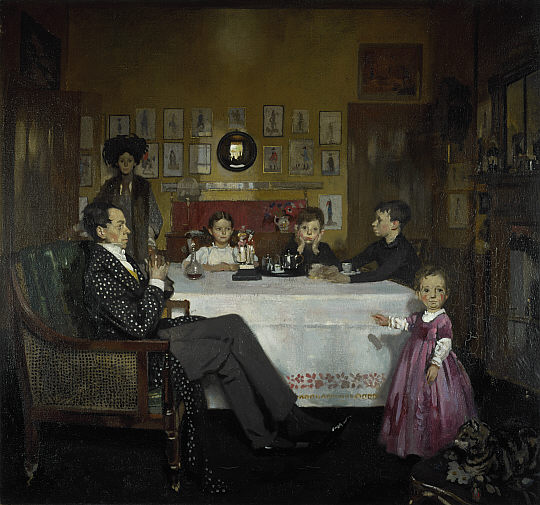
One painting I’ve long been fascinated by is William Orpen’s Bloomsbury Family (1907) a portrait of the painter William Nicholson and his wife Mabel, in the dining room of their Mecklenburg Square house in Fitzrovia-Bloomsbury. This painting usually gets a bad rap. Art historians use it to beat-up British painting up for not being French painting and social historians use it as a portrait of the iciness of Edwardian family life (as if it were a realist photograph and this were the average family). However Orpen is a wonderfully evocative painter whose works have real character and individuality and should you get to the Scottish National Gallery in Edinburgh go seek out Bloomsbury Family.

I first encountered Bloomsbury Family in Stephen Calloway’s Twentieth Century Decoration (1988), still one of the very best books on the subject.  Calloway revealed some interesting detail, particularly regarding another of Mabel’s interiors in the same house – ‘what must have been, for the time, an extraordinary scheme’ – a drawing-room with a Chinese dragon carpet in bright colours and a sofa covered in black satin – go Mabel!

The Nicholson’s dining room always stays with me as my archetypical successful yellow room. Yellow is such a difficult colour to pull off and most get it tragically wrong. In part because yellow rooms (painted with plastic paint) and flooded with Kiwi sunlight, almost always end up seeming harsh. Their reflective properties are deeply unflattering to their occupants whose skin looks jaundiced as a result.

The Nicholsons’ room on the other hand takes advantage of the use of darkness to transform what is yellow into gold by a process of dampening down the reverb so that the room and its contents glow. Nicholson arranged his walls with portrait of regency dandies in those little narrow black frames you so often encounter around old prints. Note also the convex mirror. Then he frocks-up in the same style, in imitation of what was by then the fashion of a hundred years earlier. This, and the fact that he dresses his youngest child to match the tablecloth, makes him my sort of guy.

I haven’t yet tried to create something Orpen/Nicholson inspired and I’m running out of rooms in which to try. However we have managed another painting/room link in another part of the house but this time the inspiration was more subliminal.

Peter is a fan of the Biedermeier style. He has a lovely biedermeier sofa and an elegant wine table. I was introduced to the style through interpretations by designers including Robert Venturi and Michael Graves but was wowed by the originals when we stumbled across the exhibition Biedermeier: Art & Culture in the Bohemian Lands 1814-1848 while on a visit to Prague some years back.

Long story short, one of the enduring images of that period is  Man Reading by Lamplight (1814) by the German painter Georg Freidrich Kersting (1785-1847) – seen below.
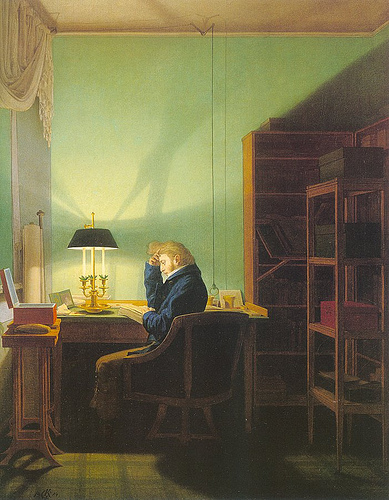
Kersting was a friend of Caspar David Friedrich. The two are both early Germanic romantics –  back when German meant romantic. However, as Kersting’s Wikipedia entry suggests, his ‘most lasting works are his figures in interiors’ that ‘feel contemporary’ due to the situations they depict.’ A Kersting interior is one we’d like to occupy even now.

Peter was always going to fall for an image like this – it is Biedermeier in style, it depicts a writer and the room is green. When it came to decorating Peter’s study (designed as a bedroom and snatched from my grasp at the last-minute – but that’s another story) we didn’t reference the image at all. Yet the other day I caught a glimpse of Peter at work and at the same time caught a glimpse of Man Reading by Lamplight as if the two images were somehow overlaid in time. Although Peter had left the tableau in question, by the time I captured it in the convex mirror, the evocation remains.

The whole point of this rambling posting is to answer the question where should we look for inspiration? My advice, look widely but know that paintings are a good place to start. Remember however that what we’re really looking for is tone and effect, an evocation of the mood or feeling you’d like to achieve, rather than an easy to put together step-by-step guide to achieving the contemporary room.

In the end, imagine the pleasure of sitting around with friends and unprompted (except perhaps by copious liquor), one of them says “this room is like being in a William Orpen, or a John Singer Sargent.’ It is a much better response than “didn’t I see this couch in the March issue of Urbis”? Admittedly it might require acquiring a whole new set of friends but you might come somewhere close – I am quite prepared to settle for “I like this room. It’s unusual. It’s nice.”

DLJ

Posted in art, inspiration | Leave a comment

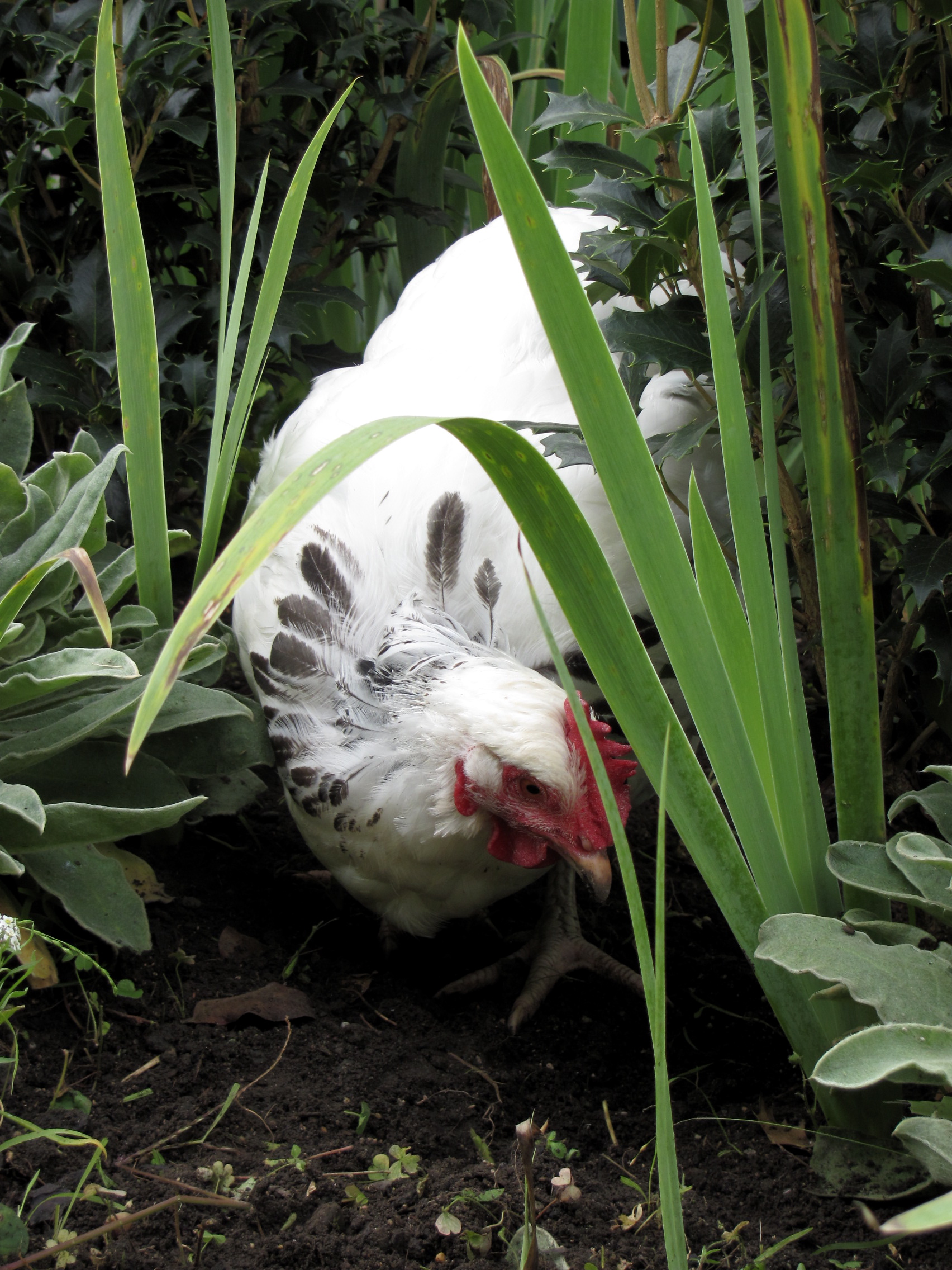
Garden helpers – Light Sussex style.

I’ve just realised that the new post sitting ready to go is another on the subject of painting – as that makes three (almost) in a row I thought you all deserved a rest – from my all too frequent obsession.  Although in my defense it isn’t about paintings:

1. I own,

2. I want to own,

or

3. are in pursuit of (well not in any real sense).

Rather I thought it time I introduced the chickens – Minnie (Caldwell) and Ena (Sharples).  They are rather pretty Light Sussexes, although one is mid-moult and isn’t looking her best.  I chose the breed because it’s an old one (Ancient Roman but very vogue Mid-Nineteenth century) and because they are supposed to be a quiet bird, suited to what is a rather small section. Then there’s the observation that Debbo, Dowager Duchess of Devonshire, and keen chicken fancier is a fan of the breed. The key reason is of course that they’re decorative – and make a nice addition to the garden of an Edwardian house – particularly in you can’t have peacocks – and the Council says exactly that – of houses in our area.

As it happens they’re not particularly quiet and they certainly aren’t small – capable of giving local cats a short shift when required. They are unusual in that they have absolutely no sense that they can fly and sit and fret about how to get down off the porch or a park bench and instead just opt to sit on the back door step, in front of the cat door, all day long.

Although it took them a while to start laying (worrying all round) they have settled in and are part of family life producing eggs for lunch most days. They live a life of pampered luxury and free range most of the time – something the neighbors have been universally sweet about. Because of this they have developed a particular interest in gardening as a hobby (when not dodging cars on the communal drive). Favourite pass times include – pruning the leaves of the rhubarb, thinning the strawberry crop and raking (or is it un-raking) piles of leaves. When this all gets too much they take a refreshing drink from the throat of the bromelaids before returning to tend to new shoots. We in turn are learning to plant differently, noting plants chickens have no apparent interest in (buxus, agapanthus, ajuga, parsley, artichokes and rose bushes), and planting great swathes of them.

However unlike the cats who just sit and watch, these two are happy to help out with gardening jobs and enjoy being near-by, working over those areas of the garden you’ve just weeded. Being white you can spot them for miles in the undergrowth, which  given how fast and far they can move when the mood takes them, is a distinct advantage.

Posted in gardening | 1 Comment

The hole in the hedge

We have this week had the hedge cut. This is a landmark moment.  It’s the first time we’ve handed this task over to the professionals – it is as if our little hedge has finally matured into something that a professional might pay due regard too, rather than laugh at – for there is no doubt that it is now a hedge – one with a hole.

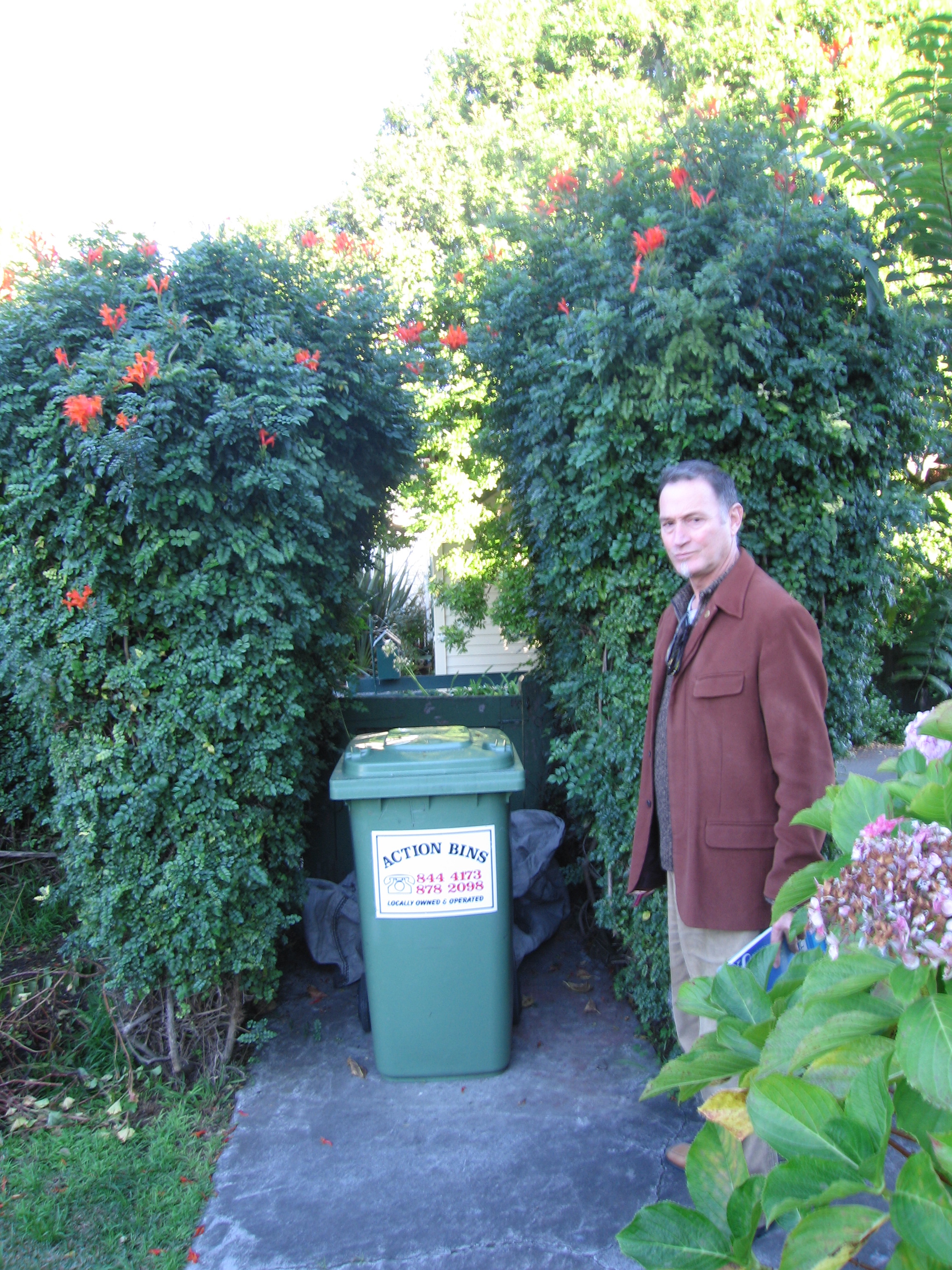
Peter & the garden entrance on first viewing - more hole than hedge.

The garden entrance – or the hole in the hedge – has always been something of a reference point to the amount of  time we’ve lived in the house. We photographed it on the first day when we were not yet owners of either house or hedge.

As you can see the hedge was something of a rump, the original garden gate was on its last legs and that entrance, no longer used, was home to the recycle bin and an old wool fadge.

Both Peter and I grew up in  Auckland and were big fans of the beautifully maintained tecoma hedges in suburbs like Epsom, Mt Albert and Remuera.  At the same time Justin a friend of mine was devoting himself to the most divinely maintained tecoma hedge, one he manicured to perfection, as counterpoint to his perfect and obsessively maintained lawn.

I’m not introducing a note of competition here, our hedge will never be the art work that Justin’s is – but I’m just flagging that it helps to have ‘a hedge friend’ to get you through the establishment phase of any hedge – simply because most people won’t share your obsession.

Peter and I  both saw the potential in what was the stub of the old hedge that still collected around the derelict gate. The problem was that this was the only place in which there was a hedge – the front of the house was ruthlessly exposed to the busy street – with only a 3 foot high hurricane wire fence between us and the road (and noisy neighbours.)

We committed to planting afresh and bought an enormous number of small tecoma plants (not costly at about $4.00 each) and placed them along the inside of the wire fence. We fed both them (and the old hedge) with sheep manure and water, water, water. One section of the new planting got hit by a frost and really struggled for the next couple of years but the area of old hedge responded well to a little attention.

The hurricane wire fence proved perfect as each new runner from the tecoma could be woven through it giving the hedge an internal support structure. While Peter and I generally have differentiated garden zones – the hedge is a joint project – I weave and shape the new runners and pick off flower heads (said to promote longer growth) – he clips and shapes.

the old gate and the hedge's Gothic phase

In a surprisingly short period of time, the two sides of the hedge round the gate began to meet in a neo-gothic point. This seemed the right moment to re-build the gate. Stephen built a replica version (sans letter-box) and together we spent a good long day trying to dig out the old totara gate posts and to dig in new ones – something much easier to do if you do it before you plant the hedge.

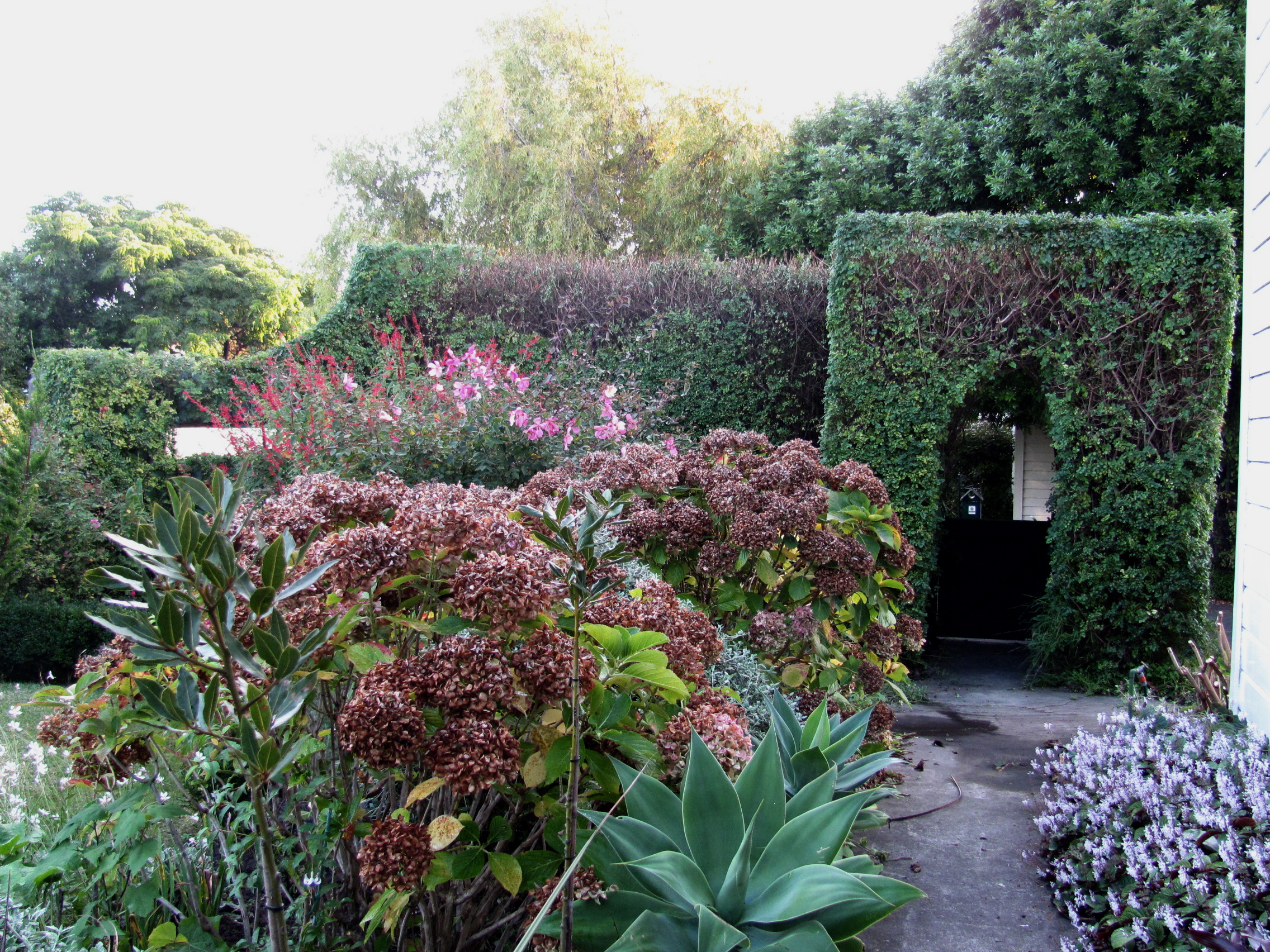
In time the hole in the hedge has closed over and the new gate makes an attractive entry point to the property – off the communal lane.  Napier is littered with old houses with garden gates that are wired up, rotting off hinges or simply overgrown and I’m always pleased, and sometimes surprised, when a visitor uses our garden gate.

Our hedge now runs the entire front of the house, covers a reinforced concrete bus shelter donated to the city by the Inner Wheel (the wives of Rotarians) in 1958, and terminates at the garden gate. All this has been achieved within five years. Now professionally cut for the first time, the hedge has a good basic form (if a slightly scalped appearance) and is again of manageable scale – aka available for a little fine tuning.

Justin would tell me that my verticals aren’t vertical, that the top has a dip in it and that the interior of my gateway needs work and he’d be right – but I defend our hedge’s romantic character, bask in the privacy it offers, and look forward to a little manicuring to come.

The Hedge professionally scalped. The little window to the left indicates the presence of the Inner Wheel bus shelter.

Posted in gardening | Leave a comment

Pursuing John Douglas Perrett.

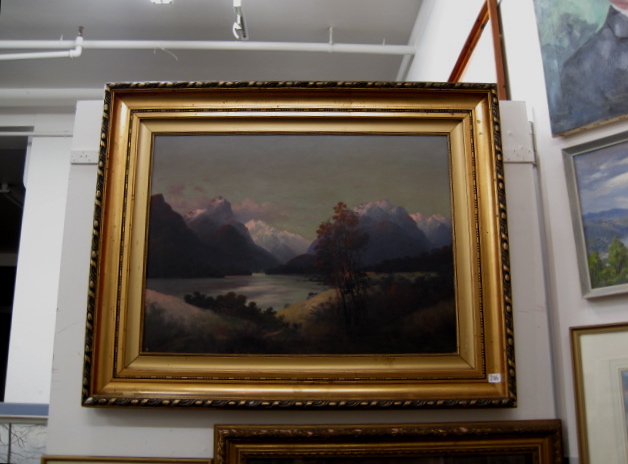
John Douglas Perrett, 'Headwaters, Lake Manapouri' (1899)

The Perrett is certainly large (see Considering John Douglas Perrett). Propped up on an easel it dominates one side of Dunbar Sloane’s auction rooms. It’s early in the viewing and there aren’t many people in the room and so I can look at it for a while uninterrupted. It’s a vast work, well framed and although the subject matter has a certain familiarity, the painting has a nice luminous quality and some appealing detail.  It will work nicely in the large studio.

I’ve done a little research and there’s a slender possibility that this work had a prior connection to Napier, where it many have been exhibited soon after it was completed in 1899, (not 1894 as printed in the catalogue). This is enough to make the connection  I was looking for. The provenance and life of the painting provides something additional that subject matter can’t – it’s a pity auction houses are so cagey about the history of paintings.  I’ve also figured out that J. D.Perrett is very much one of those neglected artists with which New Zealand is peppered. Big in his own day, there has been barely a word written about him since – except for this from a book on art investment:

 Perrett’s oils tend to be a little dark: if you can get one that is painted in purples and blues, with slashes of green, and still water, with perhaps snow on the mountains, tinged with pink and in pleasing form, then you have a good Perrett.

It’s a rather nice description written by someone who has at least taken the time to look at Perrett’s work.  It strikes me that John Douglas Perrett might be an artist worth taking a bit of an interest in, if only because we know so little about him, and that means there are lots to discover.

J Douglas Perrett, South Island Landscape,

Having checked out the Prout and the Barnes firsthand, we scoot downstairs to look at the affordable section of the sale. I like this aspect of  Dunbar’s Wellington sales, because the taste is so different to that of Auckland – more international.

This I put down to years of diplomatic postings and other international manoeuvering which have resulted in all manner of obscure artworks ending their days (foxed and dowdy in their framing) in Wellington. There are also two more Perrett’s and a George Baker I want to check out as a comparison to the one upstairs.

The larger of the two smaller downstairs Perretts, is a lovely work, darker and even more luminous than the one upstairs. It is of an unidentified South Island scene and benefits from a good frame. While looking at it, a middle-aged couple next to me – comment ‘its so gloomy nobody wants that stuff on their walls anymore.’ I can’t help but think the opposite – this one would look great in our red-walled library – where it could be gloomy to its heart’s content. Over hearing a conversation like this somehow ups Perrett’s standing in my mind.

J DOuglas Perrett, Mt Cook.

Then my eye catches the last and smallest Perrett, an oil sketch. If the others were luminous, this is absolute zinger – light reflecting off the side of Mt Cook (‘snow on the mountains, tinged with pink and in pleasing form) – it is painted with an immediacy that makes it much more in the modern taste, than is the highly polished and finished work upstairs. This one I’ll buy for sure and in strict violation of our agreed decor rule – ‘no more small paintings.’

The irony is that in my search for a large painting –  I’ve discovered Douglas Perrett, an artist that I’ve never paid even the slightest bit of attention too – but at heart I like the smaller works a lot more than I do the large work upstairs. Perhaps it’s that the big painting was, even it own day, painted to impress –whereas the little sketch is something a little closer to the heart of the artist himself.  I will however bid on the large work – oh who am I kidding, I’ll be bidding on all three.

The decision is made for me on the night of the auction when the big Perrett sells for twice my limit and more than three times the estimate.  This worries me not one bit, (I’m secretly pleased that Perrett has devoted fans out there) except that my sister has had to sit through the sale in order to bid for me. I place absentee bids on the other two Perrett’s and the George Baker – a painting that would once have been called ‘a conceit’ – but more on that another day.

In the end I come way with the Baker and the very smallest of the Perrett’s.

Lot 246A, my little Perrett, is no bigger than an A4 page. This whole expedition into colonial painting, undertaken in pursuit of a large painting has resulted, in yet another tiny art work, which in its own way presents a bigger decor dilema, than did the thought of rearranging the studio to fit an enormous work.

DLJ

Posted in art, auction finds etc. | 5 Comments

Considering John Douglas Perrett

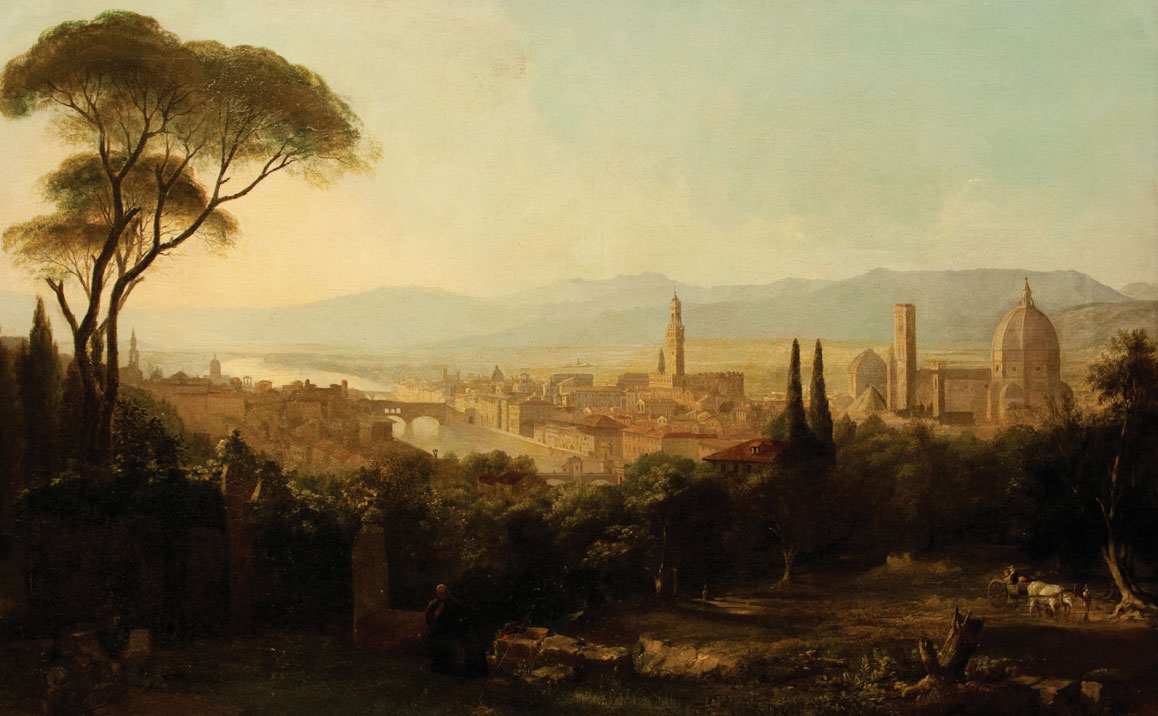
Clement Burlison (1815-1889) Florence

I have, for a while now, wanted to buy a large scale Victorian/Edwardian painting. Something vast. The problem of course is that they’re few and far between. Anything good has long been snapped up by the public art galleries and indifferent painting, easy to disguise in small formats, is not something that should ever be upsized, even in the name of décor.

First, I fell for a beautiful portrait of a woman at a window – magnificent in scale and beautifully framed – only to be told that she was “not for sale.” A slightly annoying discovery, given that within seconds of our meeting I had replanned my entire (décor) life around her needs. I then toyed for a week with a large oil of Florence by the English artist Clement Burlison.

I have a network of friends willing to act as my eyes and view ‘out of town’ works. One of these is particularly dedicated to the detail of the task. Although she described the work in a lengthy missive as ‘the size of a Turkish carpet’ – which was good – the rest of the news was bad – including speculation that ‘it may have been through a fire.

Samuel Prout (1783-1852) Cathedral Steps with Figures.

Now I am considering the possibility of a large John Douglas Perrett, Headlands Lake Manapouri (1894).

Certainly enormous (at 1000 mm x 1700mm) it is a bravado colonial landscape, one that I found accidentally (always good) while considering a small Samuel Prout. Prout was an early Nineteenth century water colourist who specialized in architectural subject matter.

We have a Prout, of a church interior and this one seemed an ideal companion piece. My mistake was to send Peter to the view.

(This by the way parallels the story of how we found this house – Peter was sent to Napier to find a small cottage and came home with … well the outcome of that decision is quite apparent).

Peter reported back that the Prout was ‘pleasing subject matter, but continued

… in a crappy late Victorian frame, not a good one, which strikes me as unusual, though it may have bumped down in its life. The surface shows some sign of damage on the right hand side … slightly clouded and dark, as if maybe covering has congealed.

It was it was one of those damming with faint praise moments. However, let loose among the other paintings in the sale, he managed to drop in the line into his email – “the Perrett is vast and Studio sized – enormous.” I rechecked the catalogue. I’d not noticed the Perrett, either because it was reproduced above a lovely Frank Barnes that distracted me, or because I am largely immune to late colonial oils, particularly those depicting the clichéd favorites, Mitre Peak, Milford Sound, Lake Manapouri etc.

Why was it New Zealand painters were so keen to paint the same material again and again? Was it simply market demand? Why do we care? Monet painted haystacks over and over but no one holds it against him.

At the moment of writing this posting I have no idea whether I am going to bid on the Perrett, which at this point I haven’t seen firsthand (that’s tomorrow). I am in research phase while at the same time dealing with a lingering internal conflict ­– in that I just don’t quite see myself as the owner of large colonial oil paintings.

Why not?

Thinking about it, I suppose I need to find away to connect myself to the painting but also to the artist. That was easy when I found myself deeply fascinated with the modern movement but it’s a little harder to do when faced with the romantic landscapes of the late Victorians. Neither the Portrait of a Woman nor the Burlison were painted in New Zealand – is this simply a case of ye olde cultural cringe? Is it that large colonial oils smack of pre-crash (1980s crash that is) INVESTMENT art?

Why would I buy a view of Lake Manapouri?

DLJ

Posted in art, auction finds etc. | 2 Comments

How to hang a European painting in a post-colonial world.

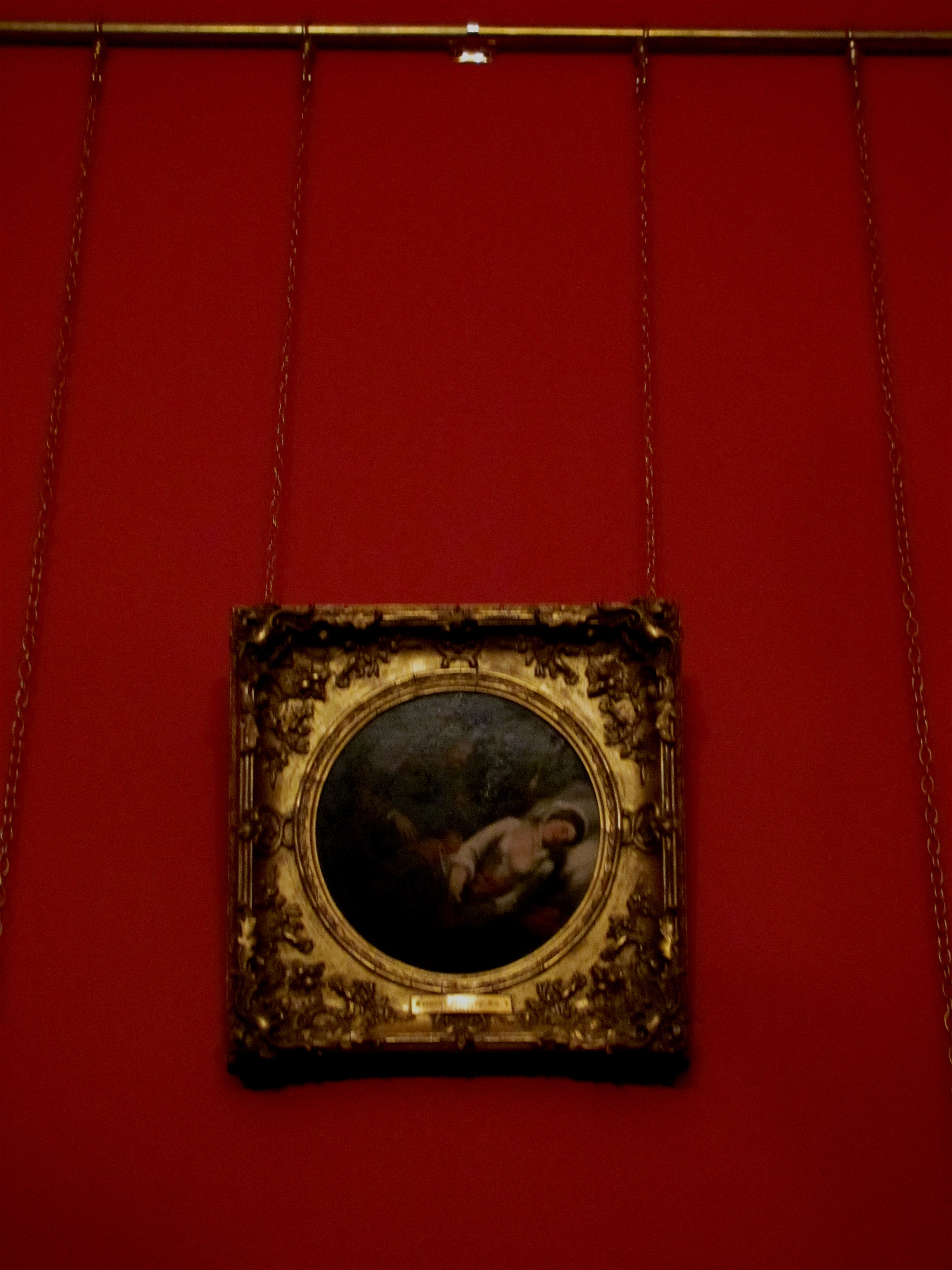
When designing our library I was looking to create a formal arrangement of Nineteenth century paintings, largely portraits, and this meant that I kept coming back to the idea of a picture rail. Not a piece of wooden beading positioned three quarters of the way up the wall, but one of those brass affairs just under the cornice and from which paintings hung on wires or chains. Most of the examples I saw were in stately homes or the type of faded Georgian townhouses that were once occupied by the types of men depicted in the portraits – so the match seemed a natural one.

There are a number of these systems however none seem available in New Zealand.  My favorite is by Frank B. Scragg & Co of Birmingham, established in 1933 as general brass founders but now specializing in supplying the picture framing trade. However the punishing exchange rate meant that I was left to lean on their expertise and head off on a journey to re-create something similar.

Therefore, in a rare moment of practicality, this posting is about how to create a brass rod and chain picture hanging system of your own, using what is available locally in New Zealand – a land in which a basic picture hook,, capable of supporting any one of the paintings in question, costs about fifty cents and any other option is considered insanity.

Those of you not of a practical bent – but who can see the inevitable result clearly foreshadowed – should skip to the last paragraph now.

The project: to create two 5metre long brass picture rails to run along parallel walls of the library. One of these passes over a window, so it will only have pictures at the far ends of the rod, but for purposes of appearances it has to span the entire wall.

The rod: This is the easiest part. A 19mm diameter brass rod is available through Mico Metals [50013468:19.05 x 1.22 HHD BR Tube]. It comes in 5metre lengths with a surface finish somewhere between shiny and dull, so just about right for our purposes. Know that you can also buy this same product as curtain rod through a number of different retailers but this is 4 or 5 times more expensive than going to a metal merchant and you’ll need the money later on. Jo Ratana at the Petone/Wellington branch of Mico Metals is friendly and helpful. They deliver at a very reasonable rate (the product is shipped from Auckland) and also they’ll cut to length – for a small charge.

The brackets: Now you need to get the rod up on the wall. Frank Scraggs uses what looks a lot like a brass curtain rod bracket – of the type you can buy at Recollections/Early Settler. (Max at Te Rapa/Hamilton branch is very helpful and again they ship for a small charge). However Scraggs’ advise a spacing of approx 1000-1200mm between brackets – so on a decent size wall of 4 metres you will need about 7 brackets. At Recollections each curtain bracket will cost you around $33.00, so in this project I’d have been up for a figure of $462.00 just for brackets.

I looked around and found that Recollections’ sash window pull [1630 Sash Eye – Offset PB] will accommodate a 19mm brass rod very nicely and these cost $10.00 each. In retrospect I might have gone for a more open style sash window pull, on which the rod could rest and rely on gravity to hold the whole lot in place (as is the case with the Scraggs system). However I was worried about the jump factor – I didn’t want the lot to come crashing down in an earthquake. Note that you must secure these to the wall with a good strong screw and as is always the case discard any screw that comes ‘free’ with the hardware – it’ll be cheap and nasty.

The finials: Again, ends for the rods are easy. There is a range of curtain rod finials at Recollections and elsewhere that will fit into your rods – everything from balls to acorns. You can even go for wooden ones (potentially painted black) as it’s worth remembering these rods are going to be very high up at the top of your wall and distance is a very forgiving thing.

I went for their Acorn finial [4612-Acorn Finial 19mm PB] at $20.00 per unit, because I’ve used them on the brass curtain rods elsewhere in the house. This added $80.00 to the project.

Having established the rods, you need to get something from which to hang the paintings. You can go for cord, ribbon, wire or chain. Hanging from a cord or ribbon means you could skip the next steps – but you want to be pretty sure of your knot tying ability. I didn’t investigate wire, which struck me as a fiddly option but if you’re a freak about getting paintings perfectly level, then  consider wire). I chose chain in part because this is a room to be used at night and in winter and chains will reflect the flickering light from the open fire.

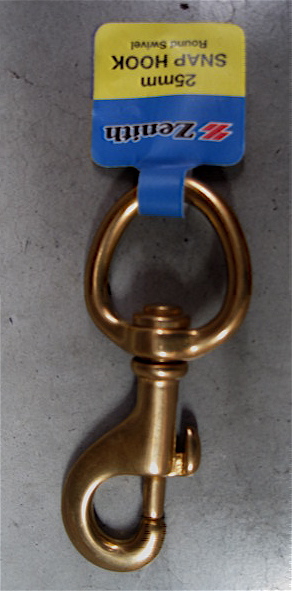
The intermediate point is a clip or hook that will go over the rod and from which the chain can be hung. Again – a traditional picture hook might have done the trick but I was looking for something jump-proof.

The clip: I thought of a shackle. However these are only really available in a crude galvanised form or as hyper-expensive bronze castings from a ship chandlers. Then I tried for a small-scale version of those S-shaped double-ended hook used for hanging pots and other kitchen objects. There are plenty of these around but those in brass didn’t intersect with the scale of the pipes.

In the end found what I needed in our local hardware store Mitre 10. This was a simple snap swivel hook with a closed loop at one end and a spring-loaded jaw at the other. In essence it is a heavy brass version of the clip that used to hang bunches of keys from a belt. The 20mm version proved to small for my 19.05mm pipe so I ungraded to their 25mm size. Made-in-Taiwan these were cast in brass and retail at a very reasonable $6.98.  However I estimated I needed about 20 – so I brought them on an instalment plan – adding one or two every time I went to buy paint or screws. Still they cost about $140.00.

The swivel hooks slot onto the rods. Be aware if you’re using closed sash eyes then the whole spacing of the brackets and clips needs to be determined before they are attached to the wall – because the clips can’t slide past the brackets afterwards. This takes a little thinking through.

However the point of using a system like this is to formalise the hanging process in terms of the architecture of your room and to avoid the haphazard banging of a picture hook into the wall surface. So plan your hanging well ahead, noting that some paintings will share a set of chains with another work while some will have their own individual set.

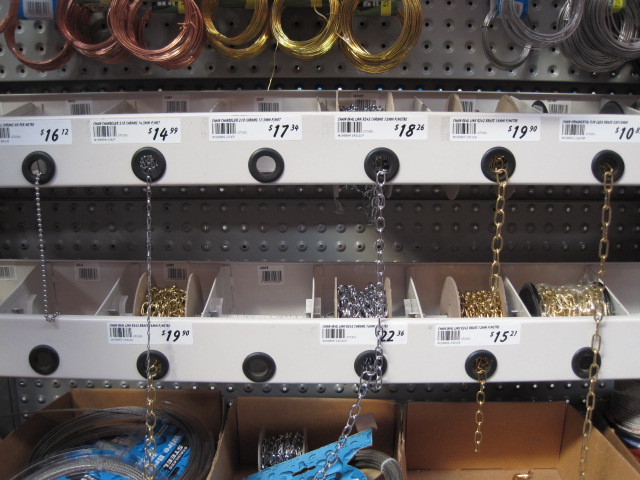
The chains: All that needs to be done now is to add the chains. I went for two different chain sizes [Mitre 10 Chain Oval Link R242 12mm and 16mm] depending on the weight and scale of the paintings to be hung. The smaller chain needs a small spilt ring (like a key ring) in order to fit into the jaws of the snap clip. These don’t come in brass but are too small and too high up for anyone to notice.

Brass chain isn’t cheap [12mm $15.21 and 16mm $19.90 per metre] and chain doesn’t pop up as a featured sale item in Mitre 10 catalogues very often. With the ceiling height here 3.7metres, it takes about 4metres of chain to get a painting to eye level. I got lucky finding a spool marked down in a local hardware, but although the cost of this exercise was adding up I was too far in to stop now.

Hanging fixtures: With the chains cut to length and in place you need to connect the paintings. I’ve not settled on one method but many. Those little split rings come in handy, so do the butcher’s hooks. In some cases I’ve used an open-ended cup hook screwed into the back of the picture and hooked into the chain.

I’m looking to see how each system behaves before settling on any one way of doing things. Attaining a level picture is something of an issue – but what I’ve found is that with a little adjustment near enough – can be achieved.

The finished result works well. The paintings all hang out from the wall on a lean, with their bottom edges separated from the wall by little cushioned buttons provided by the framer. This gives good airflow around the works and helps with reflections. Where more than one painting is hung on the same set of chains they seem to hang flatter.

The result is grand and luxurious, perfect for the room, and suited to its aristocratic painted occupants.

The cost however was excessive.

I’ve never bothered to add it up but I’d guess it comes to about $80 each for the 9 paintings the system currently supports. It was, like so much in decorating, one of those projects that appears at first to be a minor detail (to be tackled after the costly building work had been undertaken). It was certainly one of those projects you must never cost out beforehand (or after).  It is one of those ideas that you must simply commit to you must and just press on and most importantly never confess to anyone what it really cost.

DLJ

Posted in art, practical matters | 10 Comments

Moroccan Style after YSL

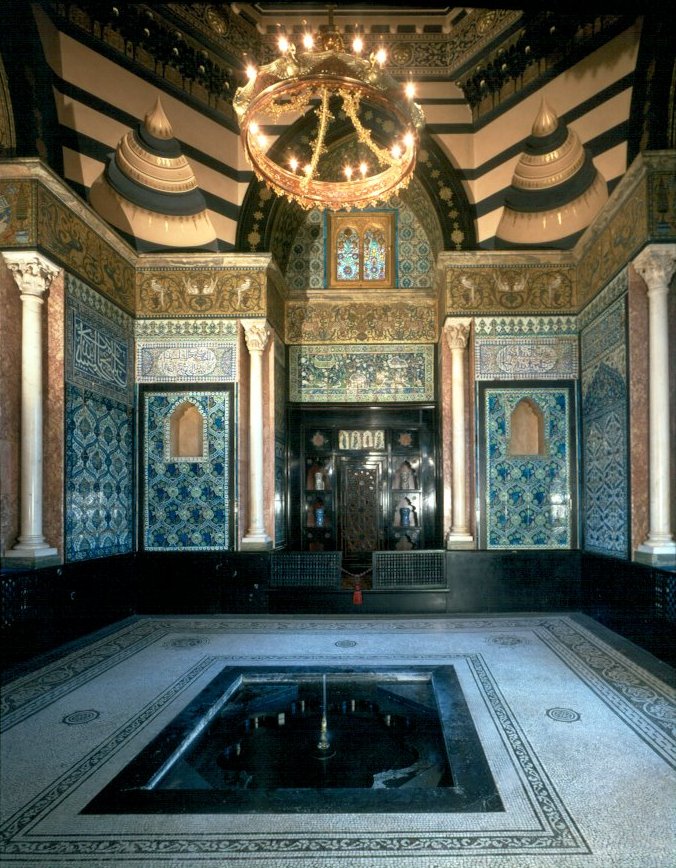
Frederick Lord Leighton's Arab Hall (1879) with help from architect George Aitchison

How does one do a Moorish-Moroccan interior after YSL?

I ask the question as I am in the early design stages of a small bathroom and searching for a theme, or rather a style.  The theme of the last bathroom (and a future blog posting I’m sure) was ‘a first class men’s bathroom on the Titanic.’ Female friends have quite simply requested that the theme of the next one (intended for guests) be ‘the girl’s bathroom’ but other than that have left the style choices pretty open.

At first I was considering something in the Chinoiserie line but then for reasons unknown I began leaning towards the oriental aesthetics of Frederick Lord Leighton. His is a house museum that I’ve never managed to visit but that seems to be looming large in my imagination, probably because the house has recently undergone restoration and photos of it have been popping up everywhere.

The great treasure of Leighton’s house is the Arab Hall, a symphonic arrangement of friezes, coloured tiles and metal work all surmounted by an impressive dome. This is not something I could pull off in a guest bathroom little bigger than a shoebox. However it’s not the scale of Leighton’s endeavours that puts me off. It is the observation that, at least as far as the late twentieth and early twenty first centuries are concerned, Moroccan is the preferred style of the ageing (now wealthy) hippy – as seen on Absolutely Fabulous.

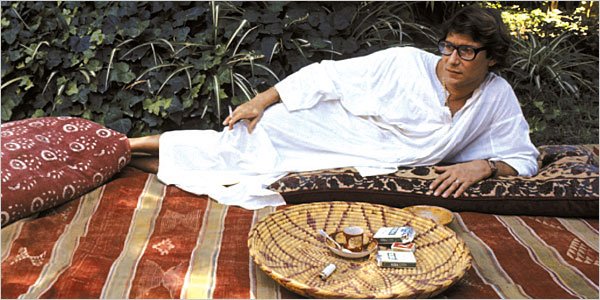
This is something we can blame on the brilliant and all pervasive Yves Saint Laurent whose Moroccan inspired homes, gardens and collections through the 1970s cemented the style in the imagination of a generation of hashish-smoking, free-love seeking world travellers, among whom the transplanted style is a perfectly logical way to spend the pots of disposable income that seems to magically attach itself to even the least materially focussed of baby-boomers.

Generalisations, especially broad and sweeping ones like that one above, have a weird Karmic ability to come back and hit me. This happened the other day when tired and defeated by the hum drum boringness of contemporary bathroom shops – with their conformist European modern stainless steel tapware – I strayed online and discovered a seller of brass (and ceramic or silver) wash basins – all sourced in Morocco or thereabouts.  A few numbers rapidly entered and a good hard tap on the enter key and a few days later I took delivery of a lovely beaten brass washbasin.

The question now is how to progress from here?

I’ll keep you posted.

DLJ

Posted in inspiration | 5 Comments

China Verses Made in China.


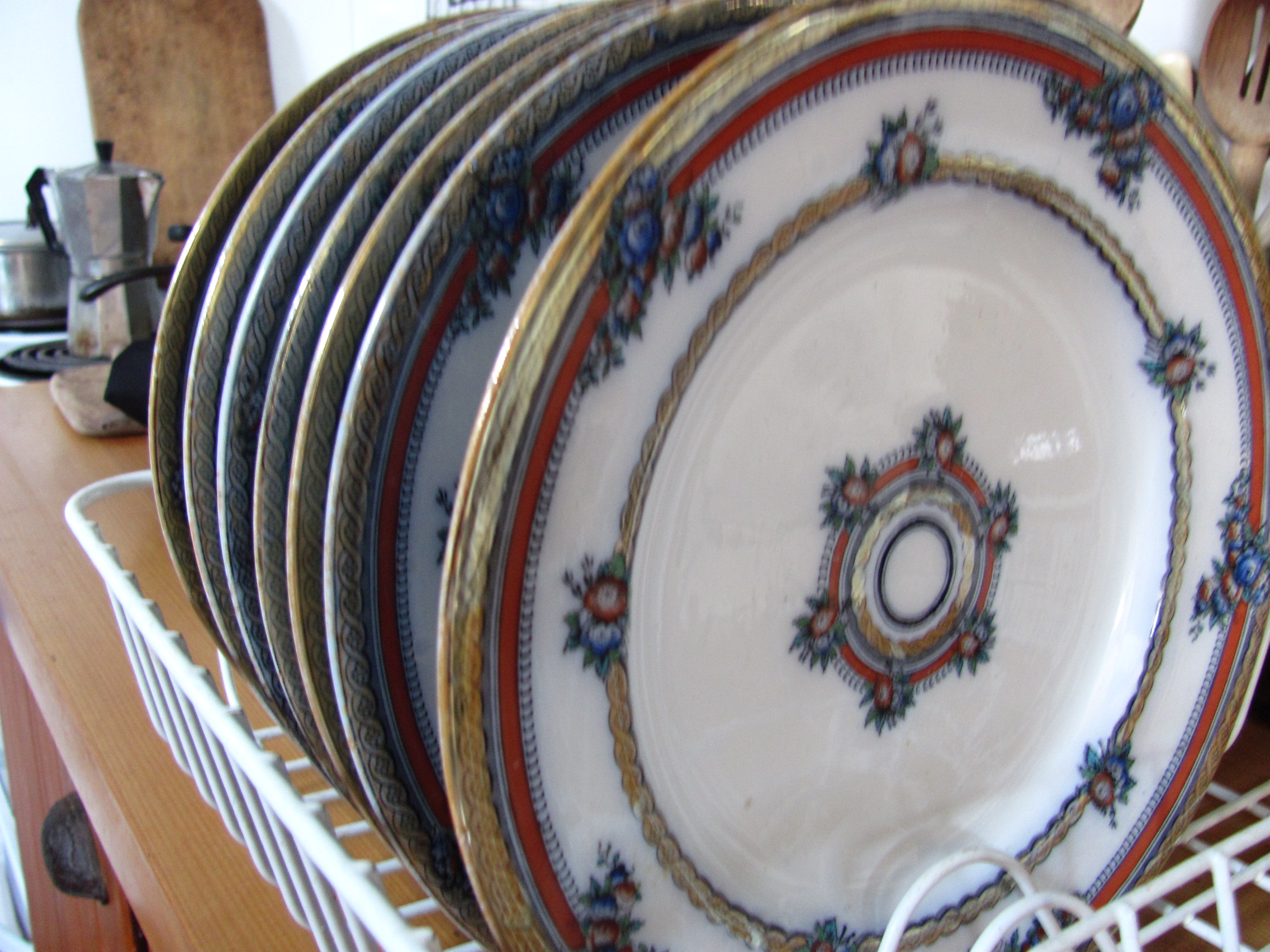
This is the reason nobody wants these plates any more.

It’s called washing up. Once upon a time people used to stand round after a meal and washing up proved the perfect time to conduct a lot of family business. It didn’t involve eye-to-eye contact yet you were doing something. This meant, in the worst case, you didn’t have to answer until you had a chance to think of how you might avoid what you didn’t want to say.

In the best cases, it was rhythmic and even relaxing. It was, to a degree, the ceremonial end of eating. You then began the rest of the evening.


These plates can’t be put in a dish washer.

Occasionally you see in a second hand shop tragic results of people who inherited Victorian and older plates and didn’t know this. (The last one I saw was a Victorian plate with hand painted flowers, which were botanically correct and carefully observed. The dishwasher probably over several months had scalped the colour and by the time the person noticed it was too late).

I bought eight of these beautiful Victorian plates for $50 at the local antique auction last night. There was one other bidder.

That makes each plate approximately $6.00 each. Even China, I mean the state of ­– can’t match this level of cheapness.

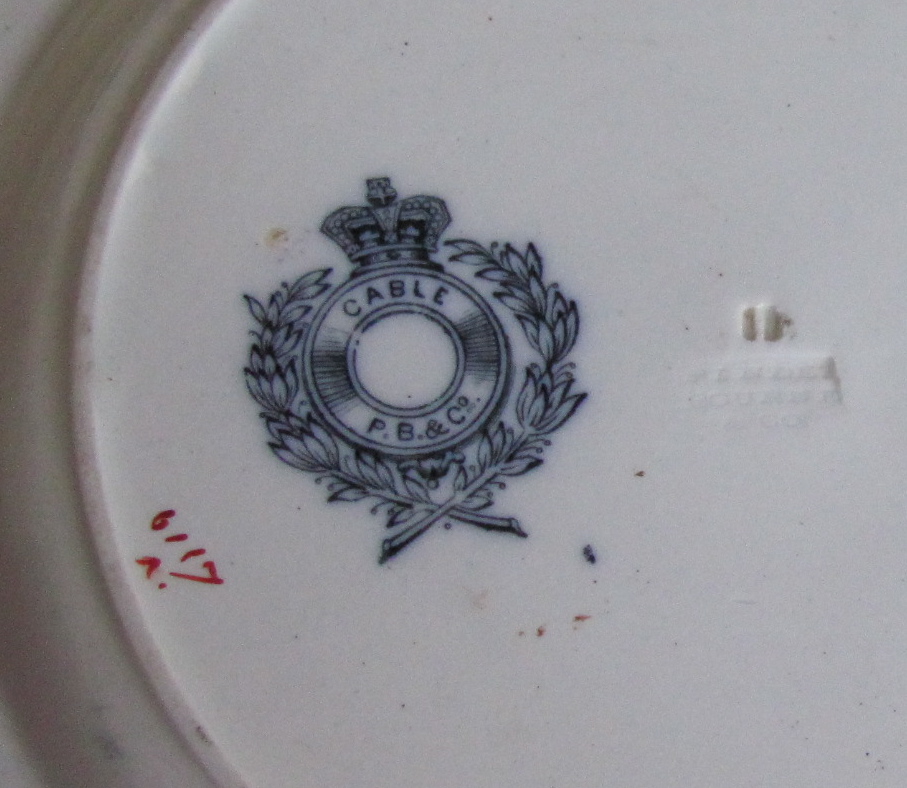
I did a spot of research (thank you Sister Google). They come from the firm which preceded Doulton. It was called Pinder, Bourne & Co and they were a North Staffordshire pottery that specialised in manufacturing earthenware. Their street address was Nile Street Burslem and they were active between 1862-1882.

What happened in 1882 was that the sole proprietor of the pottery approached Henry Doulton to form a partnership. Not a good idea. It didn’t work out, the dispute went into arbitration and for whatever reason, Pinder exited stage left. The next thing you know the company was called Doulton & Co and the rest, as they say, is history.


What do I like about these plates?

They make you feel special.

They have a lovely metallic lustrous sheen. The silver on them is quite shiny. The colour range is quite limited. There is a pleasing terracotta shade.


I also like its mixture of design elements, so typical of the profligate Victorian century which had such an astonishing sense of itself that everything would just keep expanding and multiplying – empires, populations, wealth, happiness. So these happy plates have a cornucopia of flowers, little intertwined rope motifs.

There’s a lot to look at. Probably way too much for people who like minimalism. Hurray! Keep on liking minimalism. It means I can keep on buying plates like this for under seven dollars.

It’s called the economy of aesthetics.

PW


Posted in auction finds etc. | Leave a comment

Orientalising-up

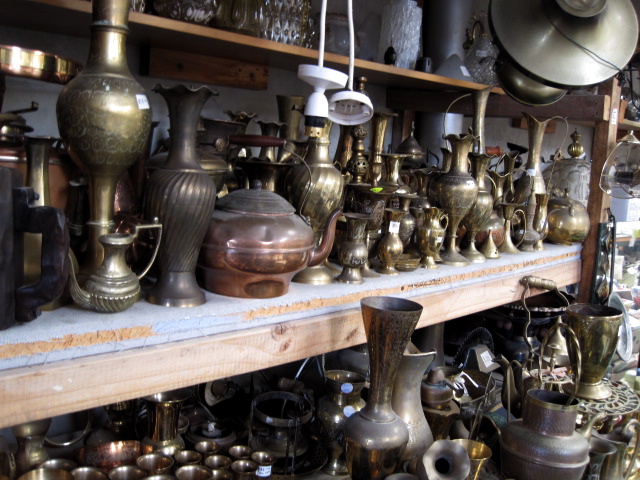
The 'brass' shelf White's Traders

The other day I set my mind to thinking about a new lamp. My old standard lamp – a nanna-style turned wooden number painted green – had been dislodged in the reorganisation of my study, pending the arrival of the Maple suite. I needed something to cast light over the little mahogany dropside table on which I write.

We headed off to the usually reliable White’s, an enormous second hand warehouse, fifteen minutes drive away from here. However their selection of lamps was uninspiring, testament to the desirability of a good lamp in the age of invasive down-lighting. Their best option was a smaller version of the one I was discarding – a crudely turned wooden lamp base that I could at least paint. However it didn’t inspire me enough to put my hands in my pocket. I considered instead buying a small lustre ware sugar bowl for no other reason than it had caught my eye and was ridiculously cheap.

As I was about to leave I spotted a shelf of brassware – engraved and beaten shields, platters, bowls, vases, jugs and cigarette boxes of all descriptions piled together with a few horse brasses thrown in for good measure. These were the sort of decor items that used to be in houses around the country but which have generally disappeared from view.

The logic of such widespread rejection of all things brass probably relates to uncomfortable memory that so many baby boomers have of living with wartime fathers (Kiwi dads brought brass objects and leather footstools back from the Middle East during both World Wars). Then there’s the fact that so many people feel obliged to polish brass.

I for one recall childhood brass polishing sessions at my grandmother’s house. Timed with school holidays they were something we came to enjoy – the horse brasses included. However I fully get that some (most) people just can’t be bothered. For this reason secondhand shops are full of abandoned brass – some of which, judging by Whites’ stash, had lamp base potential.

Given that the Victorians were fond of using brass to Orientalise-up their interiors and the fashion for domestic brass and copper items lasted off and on through to the 1970s, there’s a big range of material out there. Add to that the brass trove in front of me had origins in marketplaces from Cairo to Shanghai and the style options were vast.

There is no publication that I know of that provides a guide to brass and there are certainly no makers or designers marks to obviously look out for. Therefore when distinguishing old from new, good from bad, one can only go on instinct.

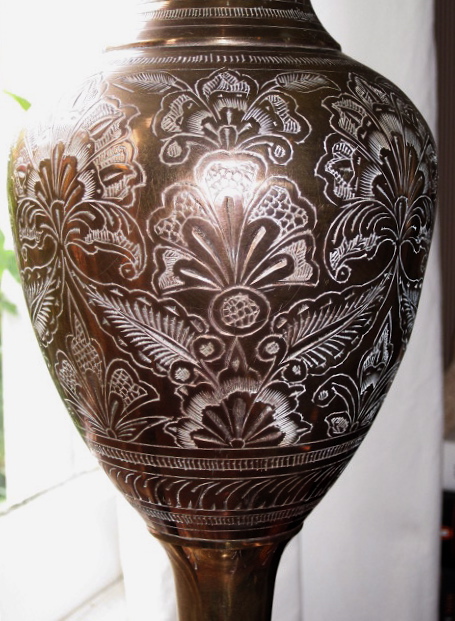
If I knew nothing about selecting brass, I knew a little about lamps. I opted for the advice I learnt first hand from the master New Zealand interior designer John Crichton – ‘above all a lamp needs to have presence’ – and picked a large baluster shaped vase with a wide flared rim, with engraved flower forms around the centre (Persian I’ve decided but more likely Indian). It seemed to have some age and cost just a few dollars more than the abandoned lustre sugar bowl and half the price of the rejected wooden lamp base.

A quick visit to the electrician (with a large cork, a plug and a lamp holder) and a lamp shade chosen from a box lot of chartreuse silk lamps shades I bought at an auction with the intention of recovering (I got to like their color) and I now have a new and imposing lamp over my desk.

When assembling the components I realised that my lamp was made in three parts that screw together – it is perhaps not very antique at all – but its size and its pretty engraving ensures that it has presence.

I’m vowing never to polish it – the dull colour provides a patina that suits it far more than would an attack of Brasso. Looking at my lamp as I work, I’m pleased with its scale and decoration and perhaps most pleased that it throws a flattering golden light under which my mind now strays to the decorative potential of the other neglected brass treasures that occupy that shelf at Whites.

DLJ

Posted in inspiration, practical matters | 1 Comment

A Dream Kitchen

I was looking through an Elizabeth David cooking book the other day. My brother gave these Penguin paperbacks to me in the early ‘70s. They were to improve me as a cook, but also I suspect as a person.

What struck me today was not only the number of wonderful – and simple – recipes there are in the books (I tend to go back and only use old favourites) – but also the beautiful images.

This made me think of how eagerly we ‘read’ the images back in the early 1970s. There wasn’t the vast amount of ‘lifestyle’ there is now. These books were like little passports into a dazzling foreign world.

Of course Elizabeth David is a tremendous writer. Her prose is evocative but exact (more exact in fact than a lot of her recipes.) But what seemed wonderful in the early 1970s – when most people were revelling in avocado-shaded fridges, orange plastic lampshades and sinking into a beanbag – was the window she opened to another way of doing things.

Pakeha life in NZ at that time was fiercely egalitarian and to ‘skite’ – to be different – was to invite a swift clip round the ear, a boot up the bum and if you were unlucky, a punch in the face in the street.

One day at university we took a white linen tablecloth into the university cafeteria, whatever silver cutlery we could muster and a silver candlestick. (I can’t remember what we ate.)

It was by way of ‘setting an example’ a la Lady Gaga.

It all seemed terribly new.

These cook books became preferred reading matter for a coterie of friends. We all studied them as you study a coat you might want to copy, which seems intriguingly – complexly – simple.

In time some of these friends went on to be well known cooks. One of them is on Masterchef at the moment.

2.

In one way the books did make me a better person. I learnt never to be lonely. At your lowest you can always turn out a nice meal for yourself – a glass of wine in a pleasant glass, a napkin, fresh beans say, the pleasure of what’s in season. Serve it on a pleasing plate. It’s a form of self respect.

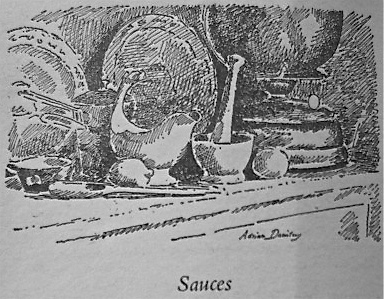
But it was only when looking at these beautiful drawings  – and then around our house – I realised how quietly influential these images had been.

Much, much later I found out Elizabeth David’s own kitchen was tiny, quite grotty and not at all ‘stylish’ in the accepted sense of the word. These days – especially since straight men realised it wasn’t cissy to cook – kitchens have become these vast show palaces.

But someone like Elizabeth David made wonderful meals in a tiny basement kitchen with everything jammed in. It’s not ideal. And somehow the kitchen we’ve ended up with here is small. It has a beautiful bench of kauri and a butler’s sink about which I have mixed feelings. (It needs a butler to keep it looking good.)

When a lifestyle magazine managed to poke its head into our lives, the one comment they made on the kitchen was faintly disapproving. The stove, they noticed, was a budget one. Sorry about that. And when Villa came out it made the mistake of saying the kitchen was original to the house.

Maybe this is the art of decorating. It’s making things look like they could have been there forever. It was actually designed by Douglas and built by his friend, Stephen Salt.

But what was guiding us all were those subconscious images we’d gained from Elizabeth David’s cooking books.

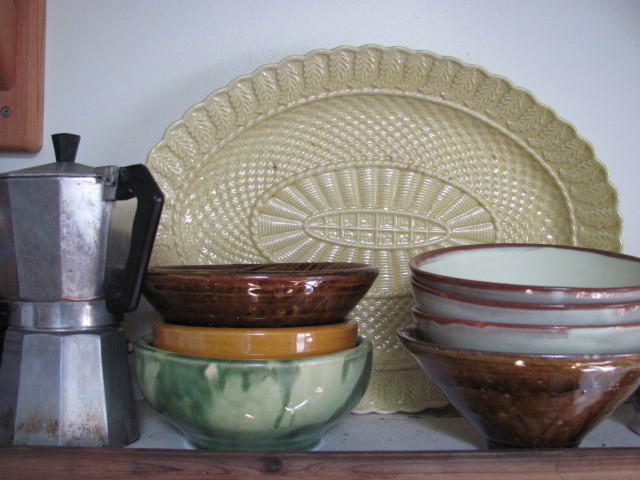
This is my kind of dream kitchen.

PW

Posted in Uncategorized | Leave a comment